
LED Strip Light products have become an increasingly popular choice for modern residential, commercial, and architectural lighting projects. Their flexible structure, compact design, and versatile installation options make them suitable for decorative lighting, indirect illumination, accent lighting, and certain general lighting applications.
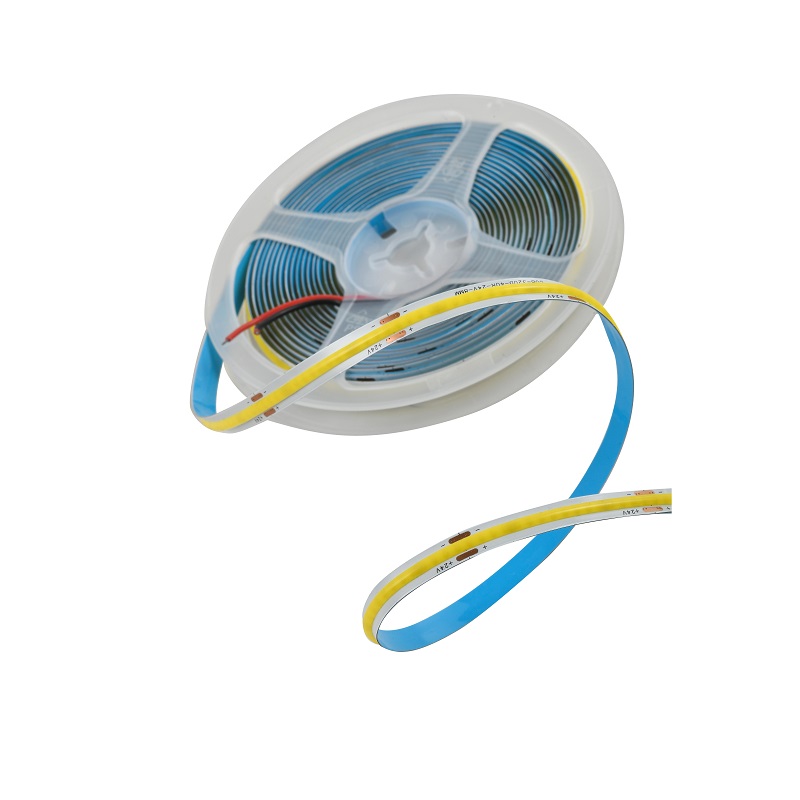
From ceiling coves and cabinet interiors to hotel corridors, retail displays, and outdoor decorative installations, LED strip lights offer lighting designers and project contractors more ways to create functional and visually attractive spaces.
However, choosing the right LED Strip Light involves more than comparing prices or selecting a preferred color. Buyers need to consider LED technology, voltage, power consumption, brightness, color temperature, waterproof protection, installation requirements, and compatibility with power supplies and controllers.
For lighting importers, wholesalers, distributors, engineering contractors, and project developers, understanding these factors can help reduce purchasing risks and improve project results.
This guide explains the main types of LED Strip Light, their applications, important technical specifications, and how to select suitable products for different lighting projects.
1. What Is an LED Strip Light?
An LED Strip Light is a flexible lighting product made with multiple LED chips mounted on a narrow circuit board. The LEDs are arranged along the strip to produce continuous or closely spaced illumination.
Most LED strip lights use a flexible printed circuit board (FPCB), which allows the product to bend around corners and follow different installation surfaces. Depending on the product design, the strip may include an adhesive backing, protective coating, silicone covering, or other structural materials.
Unlike traditional rigid lighting fixtures, an LED Strip Light can be installed in narrow spaces and concealed locations where conventional luminaires may not be suitable.
Common installation locations include:
-
Ceiling coves and recessed ceiling details.
-
Kitchen cabinets and wardrobes.
-
Shelves and display cabinets.
-
Staircases and corridors.
-
TV background walls.
-
Hotel rooms and decorative architectural features.
-
Outdoor landscape and building decoration.
The flexibility of LED Strip Light products makes them useful for both functional and decorative lighting.
For example, a strip installed inside a ceiling recess can create indirect illumination, while a strip fitted beneath a cabinet can provide additional task lighting.
OKES offers a dedicated Strip Light product category covering several product types, including COB, SMD, low-voltage, high-voltage, and RGB strip lights.
China Strip Light Factory & Suppliers
2. Main Types of LED Strip Light
Different LED Strip Light technologies serve different lighting purposes. Understanding their characteristics helps buyers select products according to project requirements.
2.1 COB LED Strip Light
COB stands for Chip on Board. COB LED strip lights use closely arranged LED chips to create a relatively continuous line of illumination.
Compared with conventional strips that show more visible individual light points, COB designs can provide a smoother lighting appearance.
Common applications include:
-
Ceiling cove lighting.
-
Cabinet and wardrobe lighting.
-
Decorative wall details.
-
Hotel and residential interiors.
-
Furniture and display lighting.
COB LED Strip Light products are particularly useful when the lighting source is visible indirectly or when designers want to minimize noticeable individual LED points.
OKES lists 12V/24V COB strip light options in its official product category. Buyers should confirm the available density, power, color options, and product dimensions for the specific model.
China Strip Light Factory & Suppliers
2.2 SMD LED Strip Light
SMD stands for Surface Mounted Device. SMD LED strip lights use LED packages mounted directly onto a flexible circuit board.
Common SMD types include 2835 and 5050, which refer to LED package dimensions.
SMD strip lights are widely used in residential decoration, commercial interiors, display lighting, and architectural applications.
Their advantages include:
-
Multiple LED package options.
-
Different power and density configurations.
-
Various color temperatures.
-
Options for single-color and RGB lighting.
-
Flexible installation possibilities.
For project buyers, the most important considerations are not simply the SMD number but also LED density, light output, power consumption, circuit-board quality, and thermal management.
2.3 RGB LED Strip Light
RGB LED Strip Light products combine red, green, and blue light sources to create different colors through compatible controllers.
They are commonly used for decorative and atmosphere lighting.
Typical applications include:
-
Entertainment venues.
-
Bars and restaurants.
-
Retail displays.
-
Hotel decorative lighting.
-
Gaming rooms.
-
Outdoor architectural decoration, when the product is suitably rated.
Some RGB products support dynamic color-changing effects. However, buyers must confirm the required controller, power supply, and control method before ordering.
2.4 Neon LED Strip Light
Neon LED strip lights use a flexible diffusing structure to create a continuous, neon-like lighting effect.
They are often used in decorative applications where designers want a visible line of light without the appearance of separate LED points.
Typical uses include signage, architectural outlines, decorative installations, and commercial display environments.
Installation flexibility, bending direction, cutting positions, and environmental protection should all be checked when selecting neon-style products.
2.5 Low-Voltage LED Strip Light
Low-voltage LED strip lights commonly operate at 12V or 24V DC, depending on the product.
They require a compatible power supply to convert the incoming electrical supply into the required DC output.
Low-voltage products are widely used in:
-
Residential cabinets.
-
Furniture lighting.
-
Ceiling details.
-
Display shelves.
-
Decorative indoor installations.
OKES lists a 12V low-voltage LED Strip Light with several configurations. Its product page describes options with different power levels, PCB widths, LED quantities, and colors. The listed configurations include 3.6W/m, 8W/m, and 12W/m. These specifications apply to the described product range, not every OKES strip light.
Zhongshan OKES Lighting Appliance Co., Ltd.
2.6 High-Voltage LED Strip Light
High-voltage LED strip lights are designed for connection to a specified mains-voltage system, according to the product’s construction and installation instructions.
For example, OKES lists a 220V 2835 120D LED strip light.
The product page describes applications such as ceiling decoration, TV background walls, staircases, corridors, cabinets, and decorative mirrors. It also lists a model with an output of 8–9W per meter and a beam angle of 120 degrees.
Zhongshan OKES Lighting Appliance Co., Ltd.
High-voltage LED Strip Light products require particular attention to electrical safety, insulation, connectors, installation procedures, and local electrical regulations.
They should only be installed according to the manufacturer’s instructions and by appropriately qualified personnel where required.
3. COB vs. SMD LED Strip Light: What Is the Difference?
COB and SMD are two commonly discussed LED strip technologies. Neither is automatically the best choice for every project.
| Comparison | COB LED Strip Light | SMD LED Strip Light |
|---|---|---|
| Light appearance | More continuous illumination | Individual LED points may be visible |
| Typical use | Concealed and decorative lighting | General decorative and accent lighting |
| Product options | Depends on model and configuration | Broad range of LED package types |
| Selection focus | Uniform visual appearance | Density, output, and package type |
| Installation | Requires suitable mounting and heat management | Requires suitable mounting and heat management |
For applications where the strip is close to the viewer or where individual light points may be distracting, COB can be worth considering.
For projects requiring different LED configurations, colors, and power options, SMD products may offer more choices.
Before purchasing either type, compare actual product samples and technical documents rather than relying only on the technology name.
4. Key Specifications to Check When Buying LED Strip Light
Technical specifications determine whether an LED Strip Light can meet the requirements of a specific installation.
4.1 Voltage: 12V, 24V or 220V
Voltage is one of the first specifications buyers should confirm.
12V LED Strip Light: Commonly used for short residential installations, cabinets, furniture, and decorative lighting.
24V LED Strip Light: Often considered for installations requiring longer continuous runs, subject to the manufacturer’s electrical design and installation limits.
220V LED Strip Light: Designed for applicable mains-voltage installations and requires specific safety precautions.
The power supply must match the strip’s rated voltage. Using an incompatible power supply can damage the product or create safety risks.
4.2 Power Consumption
Power consumption is usually expressed in watts per meter (W/m).
It helps buyers estimate the total electrical load and select an appropriately rated power supply.
For example, a 5-meter strip rated at 8W/m would have a nominal connected load of 40W, before considering additional system requirements.
When selecting a power supply, allow for an appropriate capacity margin according to the manufacturer’s recommendations.
4.3 LED Density
LED density refers to the number of LED chips or packages installed along a given length.
Higher density may help produce a more continuous lighting effect, depending on LED technology, diffuser design, and installation distance.
For COB products, buyers should check the chip arrangement and actual light appearance. For SMD products, LED quantity per meter is an important comparison factor.
4.4 Color Temperature
Color temperature affects the atmosphere and appearance of a space.
Common options include:
-
Warm White: Often selected for bedrooms, hotels, restaurants, and relaxing residential spaces.
-
Neutral White: Suitable for many kitchens, offices, retail interiors, and general-purpose areas.
-
Cool White: Often used where a brighter, cooler visual appearance is preferred.
The exact color temperature range should be confirmed for each product model.
For projects using multiple strip lights, consistent color appearance between batches is also worth checking.
4.5 Color Rendering Index (CRI)
CRI describes how accurately a light source renders object colors compared with a reference source.
A higher CRI can be important in retail displays, hospitality interiors, decorative installations, and other applications where color appearance matters.
Buyers should request model-specific CRI information instead of assuming all LED strip lights have the same color-rendering performance.
4.6 Waterproof Rating and Environmental Protection
Not every LED Strip Light is waterproof.
Indoor products without suitable protective construction should not be installed in wet or exposed environments.
For outdoor applications, buyers should evaluate the product’s IP rating, protective materials, connectors, installation position, and exposure to rain, dust, humidity, and sunlight.
The 12V low-voltage strip light listed on the OKES website is explicitly described as non-waterproof. Therefore, it should not be treated as an outdoor waterproof product.
Zhongshan OKES Lighting Appliance Co., Ltd.
For outdoor projects, select a model with verified protection suitable for the actual installation environment.
5. LED Strip Light Applications in Different Projects
5.1 Residential Lighting
Residential LED Strip Light installations are commonly used to add indirect illumination and decorative details.
Typical locations include:
-
Living room ceiling coves.
-
TV background walls.
-
Bedroom headboards.
-
Kitchen cabinets.
-
Wardrobes and display shelves.
-
Staircase edges.
For homes, buyers should consider comfortable color temperature, appropriate brightness, installation convenience, and compatibility with dimming equipment if required.
5.2 Commercial and Retail Lighting
Retail environments often use LED strip lights to highlight shelves, product displays, counters, and architectural features.
A well-planned LED Strip Light installation can complement general lighting while helping products and display areas stand out.
For retail projects, buyers should evaluate brightness, color consistency, CRI, heat dissipation, and the maintenance accessibility of the installation.
5.3 Hotel and Hospitality Lighting
Hotels use different lighting arrangements across guest rooms, reception areas, restaurants, corridors, and public spaces.
LED strip lights can provide concealed ceiling illumination, cabinet lighting, decorative background lighting, and accent lighting.
In guest rooms, warm-white strip lighting may help create a comfortable atmosphere. Public areas may require different brightness levels and color temperatures according to the interior design.
For a broader overview of hospitality lighting, visit the OKES article on LED Lighting for Hotels.
5.4 Architectural and Landscape Lighting
LED strip lights can be used to outline architectural features, highlight building details, and create decorative lighting effects.
For outdoor applications, product protection is especially important.
Project designers should check waterproof construction, UV exposure, operating temperature, cable connections, mounting methods, and maintenance access.
The selected product must be suitable for the actual environmental conditions.
5.5 Furniture and Cabinet Lighting
Furniture manufacturers and interior contractors frequently use LED strip lights to illuminate cabinets, wardrobes, shelves, and display units.
Low-voltage LED Strip Light products are often considered for these applications because they can be integrated into compact spaces using suitable power supplies.
The strip width, cutting positions, adhesive performance, and heat dissipation should be checked before installation.
6. How to Install LED Strip Light Correctly
Correct installation helps maintain lighting performance and reduce avoidable failures.
Step 1: Measure the Installation Area
Measure the required length before purchasing.
Consider corners, connection points, power supply locations, and the route of electrical cables.
Avoid unnecessary joints and ensure that the planned layout follows the manufacturer’s maximum run-length recommendations.
Step 2: Select the Correct Power Supply
For low-voltage products, choose a power supply that matches the strip’s rated voltage and total power requirement.
For high-voltage products, follow the product-specific electrical installation instructions.
Never assume that different LED strip models use interchangeable power supplies.
Step 3: Check the Cutting Positions
Many LED strip lights include marked cutting points.
Cutting outside the designated positions can damage the circuit and prevent the remaining strip from working correctly.
The OKES 12V low-voltage product page explains that the strip should be cut along its marked scissor lines.
Zhongshan OKES Lighting Appliance Co., Ltd.
Step 4: Prepare the Mounting Surface
Clean and dry the installation surface before applying adhesive-backed strips.
For installations where adhesive alone is insufficient, consider suitable mounting clips or aluminum profiles according to the product design.
Step 5: Test Before Final Installation
Test the strip, power supply, and controller before completing the installation.
Check for consistent brightness, correct color, secure connections, and any unexpected heating or flickering.
For large projects, testing a representative sample installation can help identify problems before bulk deployment.
7. How to Choose a Reliable LED Strip Light Supplier
For importers, wholesalers, lighting distributors, and engineering contractors, supplier selection is an important part of product sourcing.
A suitable supplier should provide clear product information and support buyers throughout the purchasing process.
Consider the following factors:
Product range: Check whether the supplier offers COB, SMD, RGB, low-voltage, high-voltage, and other strip light options relevant to your market.
Technical documentation: Request information about voltage, wattage, LED density, color temperature, CRI, PCB width, and environmental protection.
Product samples: Test the actual product before placing a large order. Check brightness, color consistency, flexibility, adhesive performance, and installation compatibility.
Electrical accessories: Confirm whether suitable power supplies, controllers, connectors, and other accessories are available.
Quality control: Ask about inspection procedures and how the manufacturer manages product consistency between production batches.
Certifications and compliance: Request certificates and test reports relevant to the exact model and destination market. Do not assume that every model has identical approvals.
Warranty and after-sales service: Confirm warranty coverage, exclusions, claim procedures, and technical support arrangements in writing.
Supply and customization: Discuss MOQ, packaging, lead time, available colors, and customization options before confirming the order.
A supplier that provides clear documentation and responsive technical communication can make procurement and project coordination more efficient.
8. Why Choose OKES for LED Strip Light Products?
OKES Lighting has been involved in the lighting industry since 1993 and offers a broad range of lighting products for residential, commercial, and outdoor applications.
Zhongshan OKES Lighting Appliance Co., Ltd.
Its official Strip Light category includes several product types, such as:
-
12V/24V COB strip light.
-
220V 2835 LED strip light.
-
5V neon LED strip light.
-
SMD5050 RGB strip light.
-
12V low-voltage LED strip light.
-
220V RGB LED strip light.
This product range gives buyers several options to evaluate for different decorative and lighting applications.
China Strip Light Factory & Suppliers
For wholesalers, importers, contractors, and project buyers, OKES provides a starting point for comparing strip light categories and discussing product requirements.
When contacting OKES, it is helpful to provide:
-
Intended application, such as residential, retail, hotel, or outdoor decoration.
-
Required voltage and installation length.
-
Preferred COB or SMD technology.
-
Desired color temperature or RGB functions.
-
Waterproof or environmental protection requirements.
-
Estimated order quantity and destination market.
These details help clarify which product models should be evaluated and which technical documents are required.
Explore the OKES Strip Light product range or visit the official OKES website for more information.
Conclusion
LED Strip Light products offer flexible lighting options for residential interiors, commercial spaces, hotels, furniture, retail displays, and architectural decoration.
However, different projects require different product configurations. COB and SMD technologies provide different lighting appearances, while voltage, wattage, LED density, color temperature, CRI, and waterproof protection all affect product suitability.
For lighting importers, wholesalers, distributors, and project contractors, selecting the right LED Strip Light means evaluating both product specifications and supplier reliability.
By reviewing technical documents, testing samples, confirming electrical compatibility, and checking environmental requirements, buyers can make more informed purchasing decisions.
OKES offers a variety of strip light products for different applications. Contact its team to discuss your requirements and identify suitable options for your next lighting project.
Frequently Asked Questions About LED Strip Light
1. What is an LED Strip Light used for?
An LED Strip Light is used for decorative lighting, indirect illumination, accent lighting, cabinet lighting, ceiling coves, retail displays, furniture, and certain outdoor applications when the product has suitable environmental protection.
2. What is the difference between COB and SMD LED Strip Light?
COB LED Strip Light products generally provide a more continuous appearance with fewer visible individual light points. SMD LED Strip Light products use separate LED packages mounted on a flexible circuit board and are available in various configurations.
3. Is a 12V LED Strip Light suitable for home use?
Yes. A 12V LED Strip Light can be suitable for cabinets, wardrobes, furniture, and decorative indoor installations. It requires a compatible 12V DC power supply and should be installed according to the manufacturer’s instructions.
4. Can LED Strip Light be used outdoors?
Some LED strip lights are designed for outdoor use, but not all products are waterproof. Buyers should check the IP rating, protective construction, connectors, and installation requirements before selecting a product for outdoor environments.
5. How do I choose the right LED Strip Light brightness?
Consider the intended lighting function, installation distance, room size, and whether the strip will provide general or decorative illumination. Compare lumen output per meter where available rather than relying only on wattage.
6. Can LED Strip Light be cut to different lengths?
Many LED strip lights can be cut at designated cutting marks. The cutting interval depends on the product design. Always follow the marked positions and manufacturer instructions.
7. What power supply does an LED Strip Light need?
The power supply must match the strip’s rated voltage and provide sufficient output capacity for the total connected load. The required power supply depends on the strip’s voltage, wattage per meter, and total installation length.
8. Does OKES offer different types of LED Strip Light?
Yes. The OKES website lists COB, SMD5050 RGB, 12V low-voltage, 220V, and neon LED strip light categories. Buyers can contact OKES to confirm available models, technical specifications, and order requirements.