
Lighting plays an important role in how people experience commercial interiors. In retail stores, showrooms, hotels, galleries, and restaurants, the right lighting can highlight products, define different areas, and create a more attractive environment. As businesses pay greater attention to visual presentation and energy efficiency, the LED Track Light has become a popular option for flexible indoor lighting design.
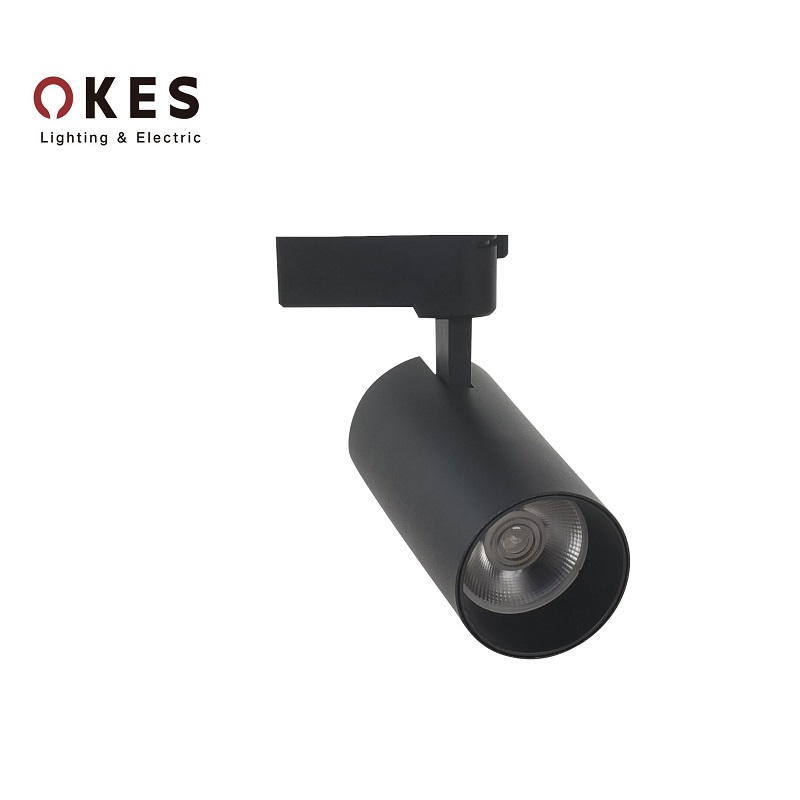
Unlike conventional ceiling fixtures that provide relatively fixed illumination, an LED Track Light can direct light toward specific objects or areas. Its adjustable positioning makes it useful for spaces where displays, furniture, merchandise, or interior layouts may change over time.
For lighting importers, wholesalers, distributors, contractors, and project designers, understanding how to select and apply an LED Track Light is essential. Factors such as beam angle, color rendering, brightness, color temperature, track compatibility, and installation layout all influence the final lighting effect.
OKES offers a range of LED track lighting products, including COB track lights and aluminum track light models. This article explores how LED track lighting supports modern commercial spaces, how to plan an effective lighting layout, and what buyers should consider when choosing suitable products.
1. Why LED Track Light Is Important in Modern Lighting Design
Modern commercial lighting needs to do more than illuminate a room. It should support the function of the space, improve product visibility, and contribute to the overall interior atmosphere.
An LED Track Light provides directional illumination through a fixture mounted on a compatible electrical track. Depending on the product design, the fixture can be repositioned along the track and adjusted to illuminate a particular target.
This flexibility makes LED track lighting different from many fixed ceiling fixtures.
For example, a retail store may rearrange its merchandise every season. A showroom may introduce new products or change its display layout. With a suitable track lighting system, individual fixtures can be redirected to accommodate these changes without redesigning the entire ceiling lighting arrangement.
LED track lighting also supports layered lighting design. Designers can combine general lighting with focused accent lighting to create different visual levels within the same space.
For commercial projects, this means an LED Track Light can serve both practical and decorative purposes.
2. How LED Track Light Creates Better Lighting Effects
Understanding the lighting effect of an LED Track Light helps project buyers make better decisions about fixture placement and product specifications.
2.1 Directional Lighting for Product Displays
Directional lighting focuses illumination on a selected object or surface. This is especially useful in retail environments where products need to stand out from their surroundings.
A track-mounted fixture can be directed toward clothing displays, shelves, counters, decorative objects, and promotional areas.
For example, a fashion retailer may use focused lighting to emphasize the texture and appearance of clothing. A furniture showroom may direct light toward sofas, tables, and decorative materials.
The final result depends on the fixture’s beam angle, mounting height, output, and aiming direction.
2.2 Layered Lighting for Commercial Interiors
A well-designed commercial lighting system often combines three basic lighting functions:
-
Ambient lighting: Provides general illumination throughout the space.
-
Accent lighting: Highlights selected products, artwork, or architectural details.
-
Task lighting: Supports activities that require sufficient visibility.
An LED Track Light is commonly used for accent lighting, although its exact role depends on its output and beam distribution.
For example, a retail store may use panel lights or downlights for general illumination and track fixtures to highlight merchandise. In a restaurant, track lights can emphasize decorative walls, dining tables, and selected interior features.
This layered approach helps create a more balanced visual environment than relying on one type of fixture alone.
2.3 Flexible Lighting for Changing Spaces
Commercial environments frequently change their layouts. Seasonal promotions, new product collections, and renovation projects may require different lighting arrangements.
A compatible LED Track Light system can make these adjustments easier because fixtures can often be moved or redirected without replacing the entire track structure.
However, repositioning should always follow the track manufacturer’s installation instructions. The electrical load, fixture compatibility, and track configuration must remain within the specified limits.
3. LED Track Light Applications in Different Industries
An LED Track Light is suitable for many indoor applications because it combines directional illumination with flexible positioning.
3.1 Retail Stores and Shopping Malls
Retail lighting directly affects how products appear to customers. Poorly positioned fixtures may create unwanted shadows, uneven brightness, or reflections, while well-planned lighting can make product displays more visually appealing.
An LED Track Light can be installed above:
-
Clothing racks and fashion displays.
-
Product shelves and promotional counters.
-
Cosmetics and accessories displays.
-
Window displays and featured merchandise.
-
Decorative walls and brand signage.
When selecting track lights for retail projects, pay attention to color rendering. A suitable CRI helps products appear closer to their intended colors under artificial lighting.
Lighting designers should also consider glare control and the relationship between ambient and accent illumination.
3.2 Furniture and Home Decoration Showrooms
Furniture showrooms use lighting to demonstrate product shapes, colors, textures, and surface finishes.
An LED Track Light can highlight selected furniture pieces and create visual separation between different display areas.
For example, directional lighting can emphasize the texture of a fabric sofa or the surface finish of a wooden table. Adjustable fixtures also allow showroom operators to change the lighting direction when furniture arrangements are updated.
Buyers should evaluate beam distribution, mounting distance, color consistency, and the appearance of illuminated materials before choosing fixtures.
3.3 Hotels and Restaurants
Hotels and restaurants often use lighting to create a comfortable and recognizable interior atmosphere.
An LED Track Light can be used to illuminate reception counters, artwork, decorative walls, dining areas, and selected architectural elements.
Warm color temperatures may be suitable for restaurants and hospitality spaces that require a relaxed atmosphere. Neutral white light may be preferred in some reception areas, corridors, and contemporary commercial interiors.
The appropriate selection depends on the interior design, materials, visual comfort requirements, and lighting plan.
3.4 Art Galleries and Exhibition Centers
Art galleries and exhibition centers need lighting that presents exhibits clearly while controlling glare and unwanted reflections.
An LED Track Light allows individual fixtures to be directed toward paintings, sculptures, display panels, and exhibition objects.
For these applications, beam angle and color rendering are particularly important. The fixture should provide suitable illumination without creating excessive brightness or distracting reflections.
Some artworks and display materials may also be sensitive to light exposure. Gallery designers should establish appropriate illumination and exposure limits according to the materials being displayed.
3.5 Offices and Creative Workspaces
Track lighting can also be used in offices, studios, and creative workspaces, particularly where designers want to emphasize selected areas or architectural details.
An LED Track Light may be installed in reception spaces, meeting areas, collaborative zones, and display walls.
However, general office lighting should still meet the project’s visual comfort and task-lighting requirements. Track fixtures should not replace a properly designed general lighting system when uniform workplace illumination is needed.
4. Key Technical Specifications of LED Track Light
Choosing an LED Track Light requires more than comparing appearance and wattage. Buyers should understand the technical parameters that influence brightness, color quality, and installation compatibility.
4.1 Wattage and Luminous Flux
Wattage indicates how much electrical power a fixture consumes. Luminous flux, measured in lumens, indicates the total amount of visible light produced.
A higher wattage does not automatically mean better lighting performance. Two LED track lights with the same power consumption may have different lumen outputs because of differences in LED chips, optical design, and driver performance.
For project evaluation, compare:
-
Rated input power.
-
Luminous flux.
-
Luminous efficacy.
-
Beam angle.
-
Installation height and target distance.
These specifications help determine whether the fixture can deliver the required lighting effect.
4.2 Color Rendering Index (CRI)
The Color Rendering Index describes how accurately a light source reveals object colors compared with a reference light source.
For retail stores, galleries, fashion shops, and furniture showrooms, color rendering is an important consideration because customers need to see products clearly and naturally.
A higher CRI is often preferred for applications where color appearance matters.
OKES lists selected LED track light models with Ra90 in its product catalogue. Buyers should confirm the CRI and related technical information for the exact model before specifying it for a project.
4.3 Beam Angle and Light Distribution
Beam angle determines how widely light spreads from the fixture.
Different applications require different light distributions:
| Lighting requirement | Suitable consideration |
|---|---|
| Highlighting a small product | Narrower beam distribution |
| Illuminating a display shelf | Medium or wider beam, depending on shelf size |
| Highlighting artwork | Controlled directional beam |
| Illuminating a larger wall area | Wider distribution or multiple fixtures |
The correct beam angle depends on mounting height, target distance, object dimensions, and desired lighting effect.
A narrow beam may create a strong focal point, while a wider beam can provide more even illumination across a larger surface.
4.4 Color Temperature
Color temperature is measured in Kelvin (K). It describes whether light appears warm, neutral, or cool.
Common lighting choices include:
-
2700K–3000K: Warm white, often used in hospitality and residential interiors.
-
3500K–4000K: Neutral white, suitable for many commercial environments.
-
5000K and above: Cooler white, used in selected modern commercial and display applications.
These are general design references rather than fixed rules. Buyers should evaluate the actual product options and consider how the lighting interacts with surrounding materials.
4.5 Driver and Dimming Compatibility
The LED driver regulates electrical power supplied to the LED module. Driver quality and compatibility influence the fixture’s electrical performance and control functions.
If a project requires dimming, buyers should confirm:
-
Whether the selected fixture supports dimming.
-
Which dimming method is available.
-
Whether the driver is compatible with the control system.
-
Whether the track and associated electrical components support the intended configuration.
Not every LED Track Light supports dimming. Buyers should request model-specific confirmation rather than assuming this function is included.
5. How to Plan an Effective LED Track Light Layout
A successful LED track lighting installation begins with a clear understanding of the space and its lighting objectives.
Step 1: Identify the Main Lighting Targets
Before selecting fixtures, determine which areas need focused illumination.
For a retail store, these targets may include product displays, shelves, counters, and window displays. For a gallery, they may include paintings, sculptures, and exhibition walls.
Identifying the targets helps determine the number and positioning of fixtures.
Step 2: Consider Ceiling Height and Mounting Distance
Ceiling height affects how light reaches the target area.
When the mounting distance increases, the illuminated area and light intensity change according to the fixture’s optical design and beam angle.
Designers should evaluate the fixture’s photometric data and, where necessary, use lighting simulation to estimate illumination levels before installation.
Step 3: Select Suitable Fixture Power and Beam Angle
The appropriate LED Track Light should provide enough illumination for the intended target without creating unnecessary glare or excessive brightness.
For focused displays, a more concentrated beam may be suitable. Larger display areas may require wider beams or multiple fixtures.
Avoid selecting fixtures based only on wattage. Lumen output and beam distribution should also be considered.
Step 4: Confirm Track and Electrical Compatibility
Track systems have different connector structures and electrical configurations.
Before purchasing, verify the track type, adapter, voltage, electrical load, and control requirements. Fixtures should only be installed on compatible track systems.
For renovation projects, it is particularly important to check the existing track specifications before ordering replacement fixtures.
Step 5: Test the Lighting Effect Before Mass Installation
For larger commercial projects, sample testing can help buyers evaluate brightness, color appearance, beam distribution, and fixture positioning.
A sample installation also allows designers to identify glare, shadows, or uneven lighting before completing the full project.
This step can reduce unnecessary adjustments during final installation.
6. LED Track Light vs. Magnetic Track Light: Which Should You Choose?
Both LED track lighting and magnetic track lighting offer flexible lighting arrangements, but their connection structures and installation methods differ.
| Comparison | LED Track Light | Magnetic Track Light |
|---|---|---|
| Connection method | Compatible track adapter and electrical contacts | Magnetic attachment to a compatible magnetic track system |
| Fixture design | Commonly includes integrated LED and replaceable-lamp options | Uses lighting modules designed for the magnetic system |
| Installation | Depends on track and adapter configuration | Requires a compatible magnetic track |
| Application | Retail, showrooms, galleries, hospitality | Residential, commercial, and architectural interiors |
| Compatibility | Must match the specified track system | Must match the specified magnetic system |
The right option depends on the project’s design, installation conditions, available fixture types, and maintenance requirements.
For traditional track lighting products, explore the OKES LED Track Light category. For alternative lighting arrangements, you can also review the OKES Magnetic Track Light category.
7. Explore OKES LED Track Light Products
OKES provides a range of LED Track Light products for indoor lighting applications. Its official product category includes several options designed for different lighting requirements.
Examples listed in the OKES catalogue include:
-
LED Track Light 10W, 20W, 30W, Ra90: A range of power options listed for this product series.
-
COB Aluminum Track Light 10W, 16W, 24W: Aluminum track light options using COB LED technology.
-
Modern Indoor COB Track Light: A product listing with 10W, 15W, 25W, 35W, and 45W options.
-
GU10 Surface Mounted Light Stand – Track Type: A track-style fixture designed for compatible GU10 light sources.
-
3 IN 1 Switch Aluminum Track Light: Another option included in the official product category.
These configurations are based on OKES’s published product listings. Actual availability, specifications, and options should be confirmed with the company before ordering.
You can explore the product range through the following official links:
For importers and distributors, reviewing several product models can help identify suitable options for different market segments. For project contractors, providing the application, track configuration, required output, and preferred color temperature can help the supplier recommend relevant products.
8. What Should Buyers Check Before Purchasing LED Track Light?
For international buyers, product selection is only one part of the purchasing process. A successful order also requires clear technical communication and product verification.
Before confirming an LED Track Light order, consider the following:
Product specifications: Confirm power, lumen output, CRI, color temperature, beam angle, rated voltage, and fixture dimensions.
Track compatibility: Verify the track type, adapter, electrical configuration, and control requirements.
Product samples: Evaluate samples when necessary to check appearance, light distribution, and installation compatibility.
Documentation: Request the technical datasheet, applicable test reports, and compliance documents relevant to the destination market and specific model.
Packaging and labeling: Confirm product labels, cartons, instructions, and branding requirements before mass production.
Warranty and after-sales service: Clarify warranty coverage, replacement procedures, spare parts, and technical support in writing.
For OEM and ODM projects, buyers should also confirm the available customization scope, sample approval process, minimum order quantity, and production schedule.
9. Why Consider OKES for LED Track Light Sourcing?
OKES Lighting was established in 1993 and is based in Guzhen Town, Zhongshan, China. The company presents itself as a lighting manufacturer and supplier with experience in product development, production, sales, and service.
Its official website includes multiple lighting categories, such as LED track lights, magnetic track lights, downlights, panel lights, spotlights, ceiling lights, strip lights, and outdoor lighting products.
For wholesalers, importers, and distributors, this broader product portfolio may be useful when developing a coordinated lighting collection. Project buyers can also explore different fixture categories according to the requirements of each space.
OKES introduces OEM and ODM cooperation on its official website. Buyers interested in customized lighting products can contact the company to discuss product selection, branding, packaging, and project-specific requirements.
To evaluate whether a particular LED Track Light is suitable, buyers should request the relevant product datasheet and confirm technical details directly with the OKES team.
Conclusion
An LED Track Light is a flexible lighting option for modern commercial and residential interiors. Its directional illumination and adjustable positioning make it useful for retail stores, showrooms, hotels, galleries, restaurants, and other spaces that require focused lighting.
Selecting the right LED Track Light involves more than comparing wattage or appearance. Buyers should consider luminous output, CRI, beam angle, color temperature, driver compatibility, track configuration, and the intended application.
A well-planned track lighting layout can help highlight products, improve visual presentation, and create a more adaptable lighting environment.
OKES offers different LED track lighting options, including COB track lights, aluminum track lights, and GU10 track-style fixtures. If you are sourcing products for wholesale distribution or a commercial lighting project, explore the official OKES catalogue and contact the team for model-specific information.
Looking for LED Track Light products for your next lighting project or wholesale collection? Contact OKES Lighting to discuss your requirements, request product details, and explore suitable cooperation opportunities.
Visit the OKES Contact Us page to get in touch.
Frequently Asked Questions About LED Track Light
1. What is an LED Track Light mainly used for?
An LED Track Light is mainly used for directional and accent lighting. Common applications include retail stores, showrooms, galleries, hotels, restaurants, offices, and residential interiors.
2. Is LED Track Light suitable for commercial lighting projects?
Yes. LED track lighting is suitable for many commercial projects because fixtures can be directed toward selected products, display areas, walls, and architectural details. The exact product should be selected according to the project’s brightness, beam angle, CRI, and installation requirements.
3. What is the difference between COB and GU10 LED Track Light?
COB LED track lights use an integrated Chip on Board LED light source. GU10 track fixtures are designed for compatible GU10 lamps. Their differences include light-source structure, maintenance arrangements, and fixture design.
4. How do I select the right beam angle for LED Track Light?
Consider the size of the target area, ceiling height, mounting distance, and desired lighting effect. Narrower beams are commonly used for focused accent lighting, while wider beams can illuminate larger surfaces.
5. What CRI should I choose for LED Track Light?
The required CRI depends on the application. Retail stores, galleries, and showrooms may benefit from higher color-rendering performance because product colors need to appear accurately. Always verify the CRI of the specific model.
6. Can LED Track Light fixtures be moved after installation?
Many track lighting systems allow compatible fixtures to be repositioned along the track or adjusted toward different targets. However, the procedure depends on the track design and installation instructions. Electrical safety and track load limits must always be observed.
7. Can LED Track Light support dimming?
Some LED track lights support dimming, but this depends on the fixture driver, control method, and track system. Buyers should confirm the exact dimming function and compatibility before ordering.
8. Does OKES offer different LED Track Light models?
Yes. The OKES website lists COB track lights, aluminum track lights, GU10 track-style fixtures, and other LED track lighting options. Contact OKES to confirm current availability and model-specific technical details.
9. How can I request a quotation for OKES LED Track Light products?
Visit the OKES official website or contact its sales team at sales@okeslighting.com. You can provide your target application, preferred product type, estimated quantity, and technical requirements to support the quotation process.