
Choosing the right Commercial LED Lighting Manufacturer is an important decision for lighting engineering companies, architectural contractors, importers, wholesalers, distributors, and smart building integrators. Commercial lighting projects often involve multiple fixture categories, different installation environments, technical specifications, and large purchasing quantities. A suitable manufacturing partner can help buyers coordinate product selection, maintain consistent quality, and manage long-term supply requirements.
However, not every lighting manufacturer has the same product range, production experience, customization capabilities, or technical support. Buyers need to look beyond product prices and evaluate manufacturing background, quality management, energy efficiency, service-life information, certifications, warranty conditions, and delivery arrangements.
This guide explains what to look for in a Commercial LED Lighting Manufacturer, how to evaluate products for different applications, and how to choose a supplier that can support commercial lighting projects and distribution businesses.
What Does a Commercial LED Lighting Manufacturer Provide?
A Commercial LED Lighting Manufacturer develops or produces lighting fixtures designed for business environments and professional projects. Its products may be used in offices, shopping centers, retail stores, hotels, warehouses, public buildings, and outdoor commercial areas.
Depending on its manufacturing scope, a manufacturer may provide:
- LED panel lights for offices and general indoor lighting.
- LED downlights for commercial ceilings and interior spaces.
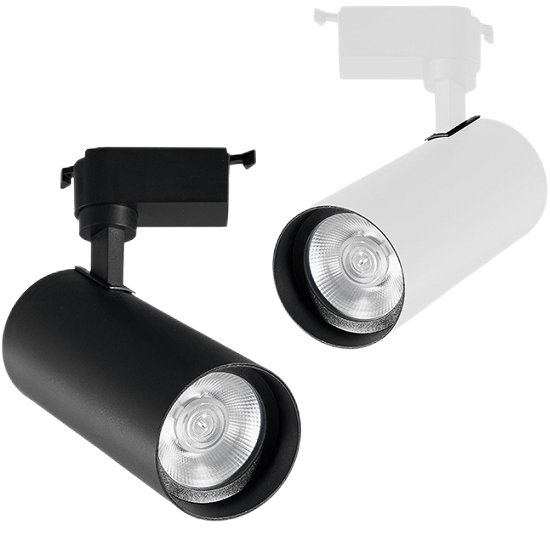
- LED track lights and spotlights for retail displays.
- LED ceiling lights for offices, corridors, and public areas.
- LED strip lights for decorative and architectural applications.
- Outdoor lighting products for building exteriors and landscape projects.
A professional manufacturer should provide clear product specifications and help buyers identify suitable fixtures according to their project requirements.
For importers and distributors, product range is also important. Working with a manufacturer that offers multiple lighting categories may simplify product sourcing and make it easier to coordinate different fixtures within one order.
Explore the OKES product collection to review available lighting categories for different applications.
Why Choosing the Right Commercial LED Lighting Manufacturer Matters
Commercial lighting products are often installed in environments with long operating hours and demanding maintenance requirements. Product selection can therefore affect electricity consumption, installation costs, maintenance schedules, and customer satisfaction.
Energy Efficiency and Operating Costs
Energy efficiency is a major consideration for commercial lighting projects. Offices, retail stores, hotels, and warehouses may operate lighting systems for extended periods, making electricity consumption an important part of building operating expenses.
A suitable Commercial LED Lighting Manufacturer should provide accurate technical information that helps buyers compare product efficiency. Important specifications include power consumption, luminous flux, and luminous efficacy.
However, lower wattage does not automatically mean better lighting performance. Buyers should compare the amount of light produced, the coverage required, and the intended application.
Lighting controls can also improve energy management. Depending on product compatibility, dimming, occupancy sensing, scheduling, and daylight response may help reduce unnecessary lighting output.
Product Lifespan and Maintenance Requirements
The reliability of commercial lighting fixtures is influenced by multiple components, including LED chips, drivers, thermal management, housing materials, and installation conditions.
For projects involving high ceilings or large numbers of fixtures, maintenance can be expensive. A product that is difficult to access or replace may create additional labor costs.
When evaluating a Commercial LED Lighting Manufacturer, request model-specific service-life information and understand the conditions under which the stated performance applies.
Also confirm warranty coverage, replacement procedures, and spare-part availability before placing a bulk order.
Consistent Product Quality
Commercial projects often require the same product model across multiple rooms, floors, or buildings. Differences in color appearance, brightness, housing finish, or electrical performance can create problems during installation and acceptance.
A reliable manufacturer should have documented quality management procedures and appropriate inspection processes.
Buyers should ask how incoming materials, production processes, finished products, and packaging are checked. For larger orders, sample approval and clear product specifications can help reduce the risk of inconsistencies between batches.
Key Capabilities to Evaluate in a Commercial LED Lighting Manufacturer
Selecting a manufacturer should involve a structured review of its product capabilities, production resources, quality processes, and cooperation model.
1. Product Range and Application Experience
A Commercial LED Lighting Manufacturer should offer products that match the needs of its target markets.
For example, office projects may require panel lights and downlights, while retail stores may need track lights and spotlights for product displays. Outdoor projects may require fixtures designed for different environmental conditions.
Buyers should check whether the manufacturer’s product portfolio matches their actual purchasing requirements.
It is also useful to review whether the manufacturer provides product information for different applications, such as:
- Office and commercial buildings.
- Shopping malls and retail stores.
- Hotels and hospitality facilities.
- Warehouses and industrial environments.
- Outdoor commercial and architectural projects.
A broad product range can help importers and wholesalers develop a more complete catalogue and coordinate purchases across different product categories.
2. Manufacturing Experience and Production Capability
Manufacturing experience can help buyers understand a company’s background and its ability to support ongoing cooperation.
When assessing a Commercial LED Lighting Manufacturer, review its establishment history, production facilities, product development resources, manufacturing processes, and international business experience.
OKES Lighting was founded in 1993 and is based in Guzhen Town, Zhongshan, China. According to its official About OKES page, the company has a broad lighting product portfolio, a professional lighting manufacturing base, and experience in production, sales, and service.
The company also introduces its production facilities and manufacturing resources on its official website.
For buyers, these details provide a starting point for supplier evaluation. Specific production arrangements, available models, production schedules, and order capacity should still be confirmed directly with the company.
3. Quality Control and Product Inspection
Quality control is essential when purchasing commercial lighting products in large quantities.
A suitable Commercial LED Lighting Manufacturer should be able to explain how products are inspected throughout production and before shipment.
Buyers may ask about:
- Incoming material inspection.
- Component and driver verification.
- Electrical performance testing.
- Finished-product appearance inspection.
- Lighting performance checks.
- Packaging and shipment inspection.
- Batch identification and quality records.
For large or customized orders, request samples before mass production. Confirm the approved product model, appearance, technical specifications, packaging, and other requirements in writing.
You can also review the OKES website for its manufacturing and quality-related information before discussing project-specific inspection requirements.
4. OEM and ODM Customization
OEM and ODM cooperation can be valuable for lighting brands, importers, wholesalers, and distributors that need products adapted to their markets.
Depending on the manufacturer’s available capabilities, customization may involve product appearance, packaging, labeling, branding, or selected technical requirements.
Before choosing a Commercial LED Lighting Manufacturer for OEM/ODM cooperation, clarify:
- Which product categories can be customized.
- Whether design or technical adjustments are available.
- Sample development and approval procedures.
- Minimum order quantities.
- Packaging and labeling requirements.
- Production lead times.
- Ownership and approval of customized designs.
OKES introduces OEM/ODM and agent cooperation options on its official website. Buyers should contact the company to confirm the available customization scope and conditions for their intended products.
How to Evaluate Commercial LED Lighting Products
A manufacturer should provide sufficient product information for buyers to compare models and determine whether they meet project requirements.
Check Core Technical Specifications
Before purchasing commercial LED fixtures, review the specifications of each model.
Important parameters include:
Wattage: Indicates the electrical power consumed by the fixture.
Luminous flux: Measured in lumens, it describes the total visible light output.
Luminous efficacy: Expressed in lumens per watt, it helps compare how efficiently a fixture converts electricity into visible light.
Color temperature: Describes the visual appearance of light, commonly categorized as warm, neutral, or cool white.
Color Rendering Index (CRI): Indicates how accurately colors appear under a light source.
Beam angle: Describes the distribution of light, particularly important for spotlights and directional fixtures.
Installation method: Determines whether the fixture is suitable for recessed, surface-mounted, suspended, or track-based installation.
The appropriate specifications depend on the application. For example, an office may prioritize visual comfort and uniform illumination, while a retail store may require directional lighting to highlight merchandise.
Confirm Dimming and Smart Control Compatibility
Smart lighting is becoming increasingly relevant to commercial buildings. Lighting contractors and system integrators may need fixtures that support dimming, occupancy sensing, scheduling, or centralized management.
However, a dimmable LED fixture does not automatically support every control method.
Before selecting a Commercial LED Lighting Manufacturer for a smart project, confirm compatibility between the fixture, driver, dimmer, sensors, controller, gateway, and software.
For projects involving building management systems, the communication protocol and integration requirements should be discussed with the relevant system integrator.
Where possible, test the complete combination of lighting fixtures and control components before approving a large order.
For more information about intelligent lighting applications, read the OKES article on Smart LED Lighting for Commercial Projects.
Verify Certifications and Market Compliance
Product compliance is an essential consideration for international lighting buyers.
The certifications and documents required depend on the destination market, product category, and intended application. Importers and distributors should identify applicable regulations before confirming an order.
Ask the Commercial LED Lighting Manufacturer for the relevant certificates, test reports, labels, and technical documentation for each selected model.
Check that the model numbers and document scope match the products being purchased. Do not assume that every fixture in a product catalogue carries the same certifications.
OKES provides general information about its international certifications and quality management experience on its official website. Buyers should request the specific documents applicable to their selected products and target markets.
Warranty, Delivery, and After-Sales Support
A commercial lighting purchase does not end when products leave the factory. Warranty conditions, delivery coordination, and technical assistance can influence the overall purchasing experience.
Understand Warranty Conditions
Before placing an order, confirm the warranty period and the components covered for each product.
Important questions include:
- What is the warranty period for the selected model?
- Which components are covered?
- What conditions or exclusions apply?
- What documents are needed to submit a claim?
- Are repair or replacement arrangements available?
- How are shipping costs handled during a warranty claim?
A clear warranty agreement helps importers and distributors manage their responsibilities to local customers.
Confirm Delivery and Packaging Arrangements
Commercial lighting orders may include multiple product categories and large quantities. Buyers should discuss production schedules, packaging, shipping methods, and delivery arrangements before confirming the purchase.
For distributors, packaging quality and product labeling are also important because they influence warehouse handling, inventory management, and retail presentation.
For project contractors, delivery should be coordinated with construction progress and installation schedules to avoid unnecessary storage or delays.
Evaluate Technical and After-Sales Communication
A reliable Commercial LED Lighting Manufacturer should communicate clearly about product specifications, installation requirements, documentation, and warranty procedures.
For smart lighting projects, technical communication is particularly important because fixture and control compatibility must be confirmed before installation.
You can review general service information on the OKES FAQ page and contact OKES to clarify the support available for specific products and orders.
Why Consider OKES as Your Commercial LED Lighting Manufacturer?
OKES Lighting has been active in the lighting industry since 1993. Its official website introduces a broad lighting product portfolio, manufacturing resources, OEM/ODM cooperation, and international partner opportunities.
For lighting engineering companies, importers, wholesalers, distributors, and smart building integrators, OKES may be worth considering when evaluating commercial lighting products and long-term supply cooperation.
Potential areas of cooperation include:
- Reviewing product categories for different commercial applications.
- Requesting product specifications and technical documents.
- Discussing OEM/ODM requirements.
- Evaluating samples before bulk purchasing.
- Confirming market-specific compliance documentation.
- Discussing packaging, delivery, and after-sales arrangements.
To make an inquiry more efficient, prepare your target market, product categories, estimated quantities, required specifications, control functions, and delivery schedule.
This information helps the manufacturer understand your purchasing requirements and identify products that may be suitable for your business or project.
Conclusion
Choosing the right Commercial LED Lighting Manufacturer requires more than comparing prices. Buyers should evaluate manufacturing experience, product range, quality control, energy efficiency, service-life information, smart control compatibility, certifications, warranty conditions, and delivery support.
For lighting engineering companies, importers, wholesalers, distributors, and smart building integrators, a reliable manufacturing partner can help coordinate product sourcing and support long-term commercial cooperation.
OKES has been active in the lighting industry since 1993 and offers a broad range of lighting products and cooperation options.
Looking for a Commercial LED Lighting Manufacturer for your next project or distribution business? Contact OKES to discuss your product requirements, request model-specific specifications, and explore suitable lighting solutions for your target market.
FAQ About Commercial LED Lighting Manufacturers
1. What does a Commercial LED Lighting Manufacturer do?
A Commercial LED Lighting Manufacturer develops or produces LED fixtures for business and professional applications, including offices, retail stores, hotels, warehouses, shopping centers, and outdoor commercial spaces.
2. How do I choose a reliable commercial LED lighting manufacturer?
Review the manufacturer’s experience, product range, production resources, quality control procedures, technical documentation, certifications, warranty conditions, and after-sales support. Samples and clear specifications are also important before bulk purchasing.
3. What products should a commercial LED lighting manufacturer offer?
Common categories include LED panel lights, downlights, track lights, spotlights, ceiling lights, strip lights, and outdoor lighting products. The appropriate range depends on the manufacturer’s market and application focus.
4. Can a commercial LED lighting manufacturer provide OEM/ODM services?
Some manufacturers offer OEM/ODM cooperation for branding, packaging, product appearance, or selected technical requirements. Buyers should confirm the available customization scope, minimum order quantities, sample process, and production schedule.
5. What certifications should commercial LED lighting products have?
Requirements depend on the destination market, product category, and application. Buyers should request model-specific certificates and test reports and verify that the documents meet the applicable local requirements.
6. Can commercial LED lighting products support smart dimming?
Some products support dimming and smart control, but compatibility depends on the fixture, driver, controller, sensors, and control system. Confirm the exact model specifications and test the proposed components before installation.
7. Why is warranty support important when buying commercial LED lighting?
Commercial projects may involve large product quantities and long operating hours. Clear warranty terms, replacement procedures, technical assistance, and spare-part arrangements can help buyers manage maintenance and customer service more effectively.
8. Does OKES offer commercial LED lighting and OEM/ODM cooperation?
OKES provides multiple lighting product categories and introduces OEM/ODM cooperation options on its official website. Contact the company to confirm available products, customization requirements, documentation, and order conditions.