
LED Downlight has become an essential lighting solution in modern residential, commercial, and architectural projects. With a clean appearance, efficient illumination, and a wide range of installation options, LED downlights are used in homes, offices, hotels, retail stores, shopping centers, and public buildings.
For lighting distributors, wholesalers, contractors, and project buyers, choosing the right LED Downlight involves more than comparing wattage or appearance. Light output, beam angle, color temperature, color rendering, installation dimensions, heat management, and environmental protection all influence the final lighting result.
A suitable LED Downlight can help create comfortable indoor environments, improve the presentation of products and interior finishes, and support more efficient lighting operation. However, different spaces have different requirements. A downlight suitable for a living room may not be the best choice for a hotel corridor, retail display area, or moisture-prone location.
This guide explains how LED Downlight works, where it is commonly used, which product features matter, and how buyers can evaluate downlights for residential and commercial lighting projects.
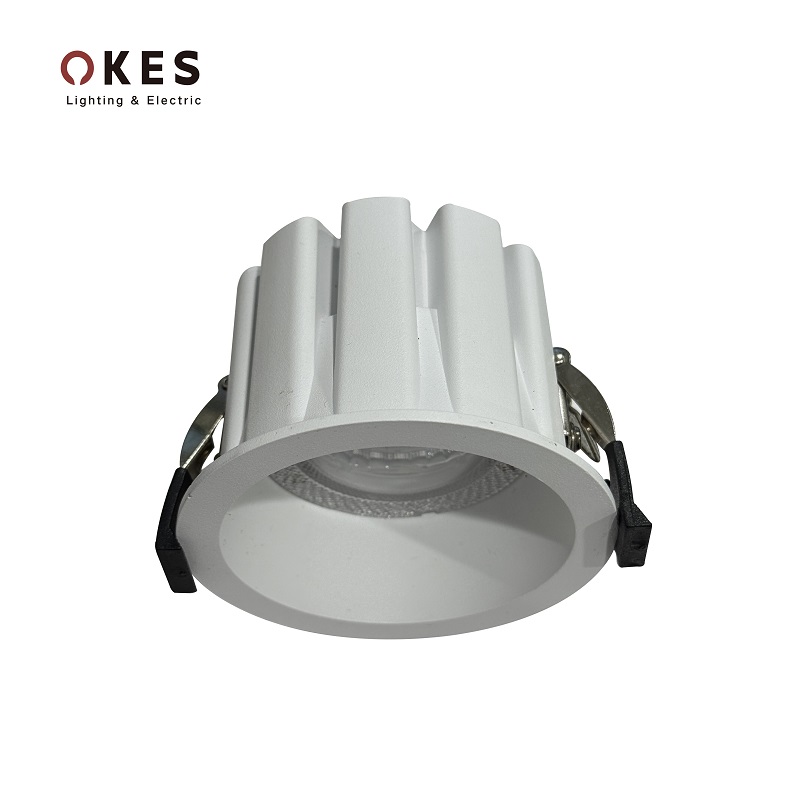
1. What Is an LED Downlight?
An LED Downlight is a ceiling-mounted lighting fixture that directs light downward to illuminate a room, surface, or selected area. Many models are recessed into the ceiling, creating a neat appearance with only the visible trim or light opening exposed. Other designs are surface-mounted and can be installed where recessed ceiling space is unavailable.
Unlike traditional lamps that use replaceable bulbs, many LED Downlight products integrate the LED light source, driver, and heat-dissipation structure into one fixture. This integrated design helps manufacturers optimize the fixture’s size, light distribution, and thermal performance.
A typical LED Downlight includes several main components:
-
LED light source: Produces illumination and influences brightness, efficiency, and color quality.
-
LED driver: Regulates electrical power supplied to the LED module.
-
Optical components: Help control light distribution, beam angle, and glare.
-
Housing and heat sink: Support the fixture and help manage heat generated during operation.
-
Mounting structure: Allows the fixture to be installed in a recessed opening or attached to a ceiling surface.
The exact construction varies by model. When selecting an LED Downlight, buyers should review the technical specifications and installation instructions for the individual product rather than assuming all downlights share the same design.
2. Why Is LED Downlight Widely Used?
The popularity of LED Downlight comes from its ability to combine practical illumination with a compact and unobtrusive design.
Energy-Efficient Indoor Lighting
LED technology converts electrical energy into light more efficiently than many traditional lighting technologies. For homes and commercial buildings where lights operate for extended periods, choosing suitable LED Downlight products can help reduce electricity consumption.
Actual energy savings depend on the fixture’s luminous efficacy, operating hours, lighting layout, and the performance of the previous lighting system. Buyers should compare lumen output and power consumption together instead of choosing a product based on wattage alone.
Clean and Modern Ceiling Appearance
Recessed LED Downlight fixtures can integrate neatly into ceilings, making them suitable for minimalist interiors and contemporary architectural designs.
They are often used in spaces where designers want functional lighting without large decorative fixtures. Surface-mounted downlights offer another option when the ceiling structure does not allow recessed installation or when a visible fixture is preferred.
Flexible Lighting Applications
Different LED Downlight designs can provide general illumination, focused lighting, or accent effects. Adjustable models can direct light toward selected areas, while fixed models are commonly used for more consistent ceiling layouts.
This flexibility allows lighting designers to select products according to room function, ceiling height, and desired visual effect.
Reduced Routine Maintenance
LED lighting products are generally designed for long operating life. A suitable LED Downlight can reduce the frequency of lamp replacement compared with some traditional lighting solutions.
However, the actual service life depends on the LED components, driver quality, operating temperature, installation conditions, and usage patterns. Buyers should request model-specific lifetime information and supporting documentation.
3. Different Types of LED Downlight
Not every LED Downlight is designed for the same installation or lighting purpose. Understanding the main product types makes it easier to select a suitable solution.
Recessed LED Downlight is installed into a prepared ceiling opening. Its compact appearance makes it a common choice for residential interiors, hotels, offices, corridors, and retail spaces.
Before purchasing recessed products, check the cutout diameter, fixture dimensions, installation depth, ceiling material, and required clearance. These details help prevent installation problems during construction.
Surface-mounted LED Downlight is attached directly to the ceiling rather than being installed inside it. It is useful for concrete ceilings, shallow ceiling cavities, renovation projects, and spaces where recessed installation is impractical.
Buyers should compare the fixture’s overall height, mounting base, appearance, and light distribution with the project requirements.
Adjustable LED Downlight allows the direction of light to be changed within the product’s designed movement range. This makes it useful for highlighting artwork, decorative walls, furniture, merchandise, and selected architectural features.
The adjustment range and beam characteristics vary by model, so buyers should confirm these details before specifying the fixture.
Anti-Glare LED Downlight
Anti-glare LED Downlight is designed to reduce direct visual discomfort from the light source. It may use a deeper light source position, a specially designed reflector, or other optical structures.
This type of fixture can be considered for offices, hospitality environments, residential living areas, and other spaces where visual comfort is important. Buyers should assess the actual optical design and, where available, review glare-related technical data.
Waterproof LED Downlight
Waterproof LED Downlight is intended for locations where moisture or water exposure must be considered. Some models are designed with an IP protection rating for specific environments.
For bathrooms, covered outdoor areas, or other moisture-prone locations, check the required IP rating, installation position, and local electrical regulations. Do not assume that every LED Downlight is suitable for wet or outdoor applications.
4. Where Can LED Downlight Be Used?
LED Downlight can serve different purposes depending on the fixture type, layout, and lighting design.
Residential Lighting
In residential projects, LED Downlight is commonly used in living rooms, bedrooms, kitchens, bathrooms, hallways, and dining areas.
Living rooms often benefit from layered lighting, combining general illumination with accent lighting around decorative features. Bedrooms may use warmer color temperatures to create a relaxed atmosphere. Kitchens need practical illumination around work surfaces, cabinets, and preparation areas.
For residential applications, buyers should consider visual comfort, color temperature, dimming requirements, ceiling design, and coordination with other light sources.
Hotel and Hospitality Lighting
Hotels require lighting that supports both functionality and atmosphere. LED Downlight can be used in guest rooms, corridors, reception areas, restaurants, meeting rooms, and selected public spaces.
Different areas may require different lighting effects. Guest rooms often prioritize comfort, while reception and service areas need clear and welcoming illumination. Corridors require a consistent layout that supports visibility and the overall interior style.
For hotel projects, consistent color appearance and reliable product supply are important, especially when multiple rooms or buildings are involved.
Retail Stores and Shopping Centers
Retail lighting influences how customers see merchandise, colors, textures, and displays. LED Downlight can provide general illumination in shops and shopping centers, while adjustable products can highlight selected products or display zones.
For fashion, cosmetics, furniture, and specialty stores, color rendering deserves particular attention. Buyers should compare CRI specifications and evaluate sample products with the actual merchandise whenever possible.
Office and Commercial Buildings
In offices, meeting rooms, reception areas, and shared spaces, LED Downlight can complement panel lights and other general lighting fixtures.
The design should provide adequate illumination while managing glare and unwanted shadows. For workstations, the lighting layout should be evaluated according to the tasks performed, screen positions, ceiling height, and applicable workplace lighting standards.
Public and Institutional Spaces
Schools, clinics, corridors, community facilities, and other public buildings may use LED Downlight as part of a broader lighting system.
For these projects, buyers should pay attention to product consistency, maintenance access, electrical safety, applicable regulations, and the availability of replacement products.
5. How to Choose the Right LED Downlight
Choosing an LED Downlight requires matching product performance with the space, ceiling structure, and lighting objective. The following factors are particularly important for project buyers and distributors.
Brightness and Luminous Efficacy
Wattage indicates how much electrical power a fixture consumes, while lumens indicate the amount of light it produces. These are different measurements.
When comparing LED Downlight products, review both lumen output and power consumption. Luminous efficacy, measured in lumens per watt (lm/W), helps buyers understand how much light a fixture produces for the electricity it uses.
The required brightness also depends on room size, ceiling height, fixture spacing, wall and floor finishes, and the lighting level required for the activity. For larger projects, a lighting layout or professional lighting calculation can help determine the number and placement of fixtures.
Color Temperature
Color temperature affects the atmosphere of an interior and is usually measured in Kelvin (K).
| Color temperature | Typical appearance | Common applications |
|---|---|---|
| 2700K–3000K | Warm white | Bedrooms, living rooms, hotels, restaurants |
| Around 4000K | Neutral white | Offices, kitchens, retail and shared spaces |
| 5000K–6500K | Cool or daylight white | Selected work areas and environments requiring a cooler appearance |
These are general references rather than fixed rules. The best color temperature depends on the interior design, local market preferences, and the intended use of the space.
For projects with many fixtures, color consistency is also important. Confirm the available color temperature and color tolerance for the selected LED Downlight model before placing a bulk order.
Color Rendering Index (CRI)
CRI describes how accurately a light source reveals object colors compared with a reference light source. A higher CRI is often preferred in environments where color appearance matters.
For example, retail stores, clothing shops, galleries, and hospitality spaces may benefit from LED Downlight products with higher color rendering performance.
OKES lists an IP65 LED downlight product with CRI90 in its product catalogue. This is a specification of the listed product, not a claim that every OKES downlight has the same rating. Buyers should confirm the CRI and other technical details of the exact model they intend to purchase.
Zhongshan OKES Lighting Appliance Co., Ltd.
Beam Angle and Light Distribution
Beam angle affects how light spreads from the fixture. A narrow beam can create a more focused effect, while a wider beam can illuminate a larger area.
When choosing an LED Downlight, consider:
-
Ceiling height and fixture spacing.
-
Whether the purpose is general or accent lighting.
-
The distance between the fixture and the target surface.
-
The presence of furniture, shelves, partitions, or other obstacles.
-
The risk of glare and uneven brightness.
A product with a high lumen output is not automatically suitable for every room. Light distribution should match the application.
Cutout Size and Installation Depth
For recessed LED Downlight products, installation dimensions are essential. The ceiling cutout must match the fixture’s specified opening size, and sufficient space must be available above the ceiling for the fixture and driver.
Before ordering, confirm the product’s outer diameter, cutout diameter, height, mounting method, and driver position. For renovation projects, check existing ceiling openings before selecting replacement fixtures.
For surface-mounted models, review the mounting base and available ceiling space.
Driver Quality and Dimming Compatibility
The LED driver influences electrical performance and the fixture’s ability to work with different control systems. If dimming is required, confirm the supported dimming method and compatibility with the intended wall switch, controller, or smart lighting system.
Do not assume that all LED Downlight products support dimming. Ask the supplier to confirm the exact driver configuration and provide relevant technical information.
Heat Dissipation and Product Construction
LED components generate heat during operation. Effective thermal management helps maintain stable performance and can influence the service life of the fixture.
Buyers should review the housing material, heat sink design, driver arrangement, and relevant test information. For products expected to operate for long periods each day, thermal performance deserves particular attention.
IP Rating and Installation Environment
The required protection level depends on where the LED Downlight will be installed. A dry indoor bedroom, a bathroom ceiling, and a covered outdoor area have different environmental requirements.
If the project requires moisture or dust protection, confirm the IP rating of the exact model and verify whether it is suitable for the installation position. Also check local electrical codes and any project-specific requirements.
6. LED Downlight for Different Project Requirements
A good product selection process begins with the project rather than the catalogue. Different customers may need different combinations of performance, appearance, and purchasing support.
| Customer or project type | Main considerations | Product details to confirm |
|---|---|---|
| Lighting contractors | Installation efficiency and project compliance | Dimensions, cutout, wiring, IP rating |
| Hotels and property developers | Visual comfort and consistent appearance | Color temperature, CRI, beam angle |
| Retail distributors | Product variety and repeat-order consistency | Models, packaging, specifications |
| Wholesalers and importers | Market suitability and purchasing costs | Compliance documents, MOQ, delivery |
| Smart-system integrators | Control and dimming compatibility | Driver type, dimming protocol, controls |
For contractors, installation dimensions and electrical compatibility can prevent costly site changes. For distributors, consistent specifications and clear product documentation support easier product selection and after-sales communication.
For importers, destination-market regulations should be considered before confirming an order. The required certificates and test reports may differ by country and product category.
7. What Should Buyers Check Before Ordering LED Downlight in Bulk?
For wholesale and engineering purchases, product selection is only the first step. Buyers should also establish clear requirements with the supplier.
Request model-specific technical documents. Ask for datasheets, dimensions, electrical specifications, installation instructions, and applicable compliance documents. Confirm that the documents correspond to the exact model and configuration being quoted.
Evaluate samples before mass production or bulk purchasing. Samples allow buyers to inspect the finish, dimensions, light appearance, installation method, and other important characteristics. If a project requires a particular color temperature or CRI, evaluate the sample against the approved requirements.
Confirm the order specification. Record the model number, wattage, lumen output, color temperature, CRI, beam angle, finish, packaging, and other required details. This reduces the possibility of misunderstandings between quotation, sample approval, and delivery.
Discuss quality inspection. Ask how the supplier manages incoming materials, production checks, and finished-product inspection. For repeat orders, agree on the specifications and inspection criteria that should remain consistent.
Clarify warranty and after-sales arrangements. Confirm the warranty period, coverage, claim process, and availability of replacement parts for the specific order. These details are important for distributors and contractors who may need to support customers after installation.
Compare total purchasing costs. Consider unit price, packaging, freight, import costs, installation requirements, spare parts, and after-sales support. A lower initial price does not always result in a lower total project cost.
8. Why Consider OKES for LED Downlight?
When selecting an LED lighting supplier, buyers should evaluate product range, manufacturing experience, technical communication, and after-sales arrangements.
OKES Lighting was founded in 1993 and is based in Guzhen Town, Zhongshan, China. Its official website lists Downlight as a product category alongside panel lights, spotlights, magnetic track lights, LED track lights, ceiling lights, strip lights, and outdoor lighting products.
Zhongshan OKES Lighting Appliance Co., Ltd.+1
A Range of Downlight Options
The OKES product catalogue includes different downlight designs, such as IP65 downlights, die-cast aluminum downlights, and adjustable surface-mounted downlights. The catalogue also lists an IP65 downlight range with 12W, 20W, 30W, 40W, 50W, and 60W options. Availability and specifications should be confirmed for the individual model.
Zhongshan OKES Lighting Appliance Co., Ltd.
Explore the OKES Downlight and lighting product catalogue to review the available categories and products.
Manufacturing and Product Development Experience
According to its official company profile, OKES has more than 30 years of experience in lighting production, sales, and service. The company also describes its lighting R&D resources, production facilities, and quality management processes.
Zhongshan OKES Lighting Appliance Co., Ltd.
For buyers, company experience is useful background, but product decisions should still be based on model-specific specifications, samples, and documentation.
Customization and Project Support
OKES states that it has a customization department and can develop product solutions according to customers’ lighting environments and requirements. Flexible minimum order quantities are also mentioned in its FAQ. The actual customization scope, MOQ, and commercial terms should be confirmed with the sales team for each project.
Zhongshan OKES Lighting Appliance Co., Ltd.
After-Sales Service
OKES describes repair or replacement support for products within the applicable warranty period and technical support for products outside that period. Buyers should confirm the warranty terms and service process for the selected LED Downlight model and order.
Zhongshan OKES Lighting Appliance Co., Ltd.
For importers, wholesalers, distributors, and lighting contractors looking for LED Downlight products, contacting the supplier directly is a practical way to confirm current models, specifications, samples, and purchasing arrangements.
Conclusion
LED Downlight is a versatile lighting solution for modern residential, commercial, hospitality, and public spaces. Its compact design, energy-efficient LED technology, and variety of fixture types make it suitable for different ceiling structures and lighting requirements.
However, choosing the right LED Downlight requires more than comparing wattage and price. Buyers should consider brightness, luminous efficacy, color temperature, CRI, beam angle, installation dimensions, driver compatibility, heat dissipation, and environmental protection.
For lighting contractors, importers, wholesalers, and distributors, reliable product information and supplier support are equally important. Requesting samples, checking model-specific documentation, confirming order specifications, and clarifying warranty arrangements can help reduce purchasing risks.
With a broad lighting portfolio and experience in the lighting industry since 1993, OKES provides downlight options for customers exploring residential and commercial lighting applications. Contact the OKES team to discuss your project requirements and identify suitable LED Downlight products.
Frequently Asked Questions About LED Downlight
1. What is an LED Downlight used for?
An LED Downlight provides downward illumination for indoor spaces. It is commonly used in living rooms, bedrooms, kitchens, offices, hotels, retail stores, corridors, and other commercial environments.
2. What is the difference between recessed and surface-mounted LED Downlight?
A recessed LED Downlight is installed into a ceiling opening, creating a more integrated appearance. A surface-mounted LED Downlight attaches directly to the ceiling and is suitable when recessed installation is not practical.
3. How do I choose the right wattage for an LED Downlight?
Wattage alone does not determine brightness. Compare lumen output, luminous efficacy, ceiling height, room size, fixture spacing, and the intended lighting level. A lighting calculation can help determine the appropriate quantity and arrangement.
4. Which color temperature is suitable for LED Downlight?
Warm white is commonly considered for bedrooms, living rooms, and hospitality spaces. Neutral white is often selected for offices, kitchens, and commercial interiors. The final choice should match the interior design and intended use.
5. Is LED Downlight suitable for bathrooms?
Some LED Downlight models are designed for moisture-prone environments. Check the IP rating, installation location, and applicable electrical requirements before using a fixture in a bathroom or other wet area.
6. What does CRI mean in LED Downlight specifications?
CRI stands for Color Rendering Index. It indicates how accurately a light source reveals object colors. Higher CRI products may be preferred in retail, galleries, hospitality, and other environments where color appearance is important.
7. Can LED Downlight be connected to a smart lighting system?
Some LED Downlight products support dimming or smart control, but compatibility depends on the driver and control system. Confirm the supported dimming method and protocol before purchasing.
8. What should I check before buying LED Downlight in bulk?
Review the product datasheet, lumen output, wattage, CRI, color temperature, beam angle, dimensions, installation requirements, applicable certificates, packaging, warranty terms, and delivery arrangements. Samples are recommended before large orders.
Contact OKES for LED Downlight Products
Looking for LED Downlight products for your lighting distribution business, commercial project, or residential development?
Contact OKES to discuss product specifications, available models, samples, and wholesale or customization requirements.
-
Website: www.okesled.com
-
Email: sales@okeslighting.com
-
Email: service@okeslighting.com
-
WhatsApp: +86 13189249015