
Finding a reliable LED Lighting Supplier is essential for lighting engineering companies, architectural lighting contractors, importers, wholesalers, retail lighting distributors, and smart building integrators. The right partner can help businesses manage purchasing costs, maintain consistent product quality, meet project specifications, and provide dependable service to their customers.
For B2B buyers, selecting lighting products involves much more than comparing quotations. Energy efficiency, service life, certification requirements, warranty coverage, delivery reliability, and intelligent control compatibility all affect the long-term value of a lighting project. Buyers also need a supplier that communicates clearly, understands international market requirements, and can support repeat orders as their business grows.
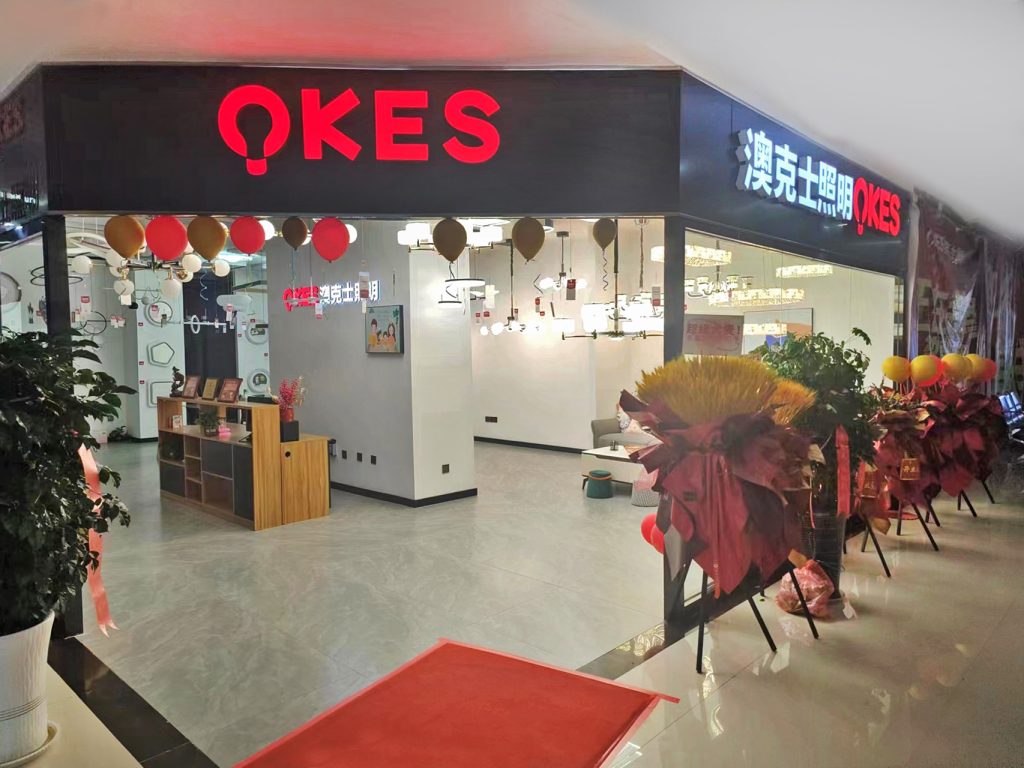
OKES Lighting has operated in the lighting industry since 1993 and offers a range of lighting products and business cooperation services. For companies sourcing lighting for commercial projects or distribution, understanding how to evaluate a potential supplier is the first step toward a successful partnership.
This guide explains the key factors to consider when selecting an LED lighting partner and how to make a more informed purchasing decision.
Why Choosing the Right LED Lighting Supplier Matters
A professional LED Lighting Supplier contributes to more than the initial product purchase. Its manufacturing experience, product portfolio, quality management, and communication can influence procurement efficiency, installation schedules, customer satisfaction, and after-sales costs.
Support for Lighting Engineering Projects
Lighting contractors often work on offices, hotels, shopping centers, residential developments, public buildings, and outdoor lighting projects. Each application has different requirements for brightness, color appearance, beam distribution, installation methods, and environmental conditions.
A suitable supplier should help buyers identify products that match the project specifications and intended use. Clear technical documentation also helps contractors coordinate with architects, electrical engineers, installers, and project owners.
For example, a retail project may require adjustable accent lighting, while an office installation may prioritize uniform illumination and visual comfort. Outdoor applications may require fixtures designed for the relevant weather and environmental conditions.
Selecting an experienced LED Lighting Supplier makes it easier to discuss these differences before purchasing and helps reduce the risk of choosing unsuitable products.
Reliable Supply for Importers and Distributors
Importers, wholesalers, and lighting retailers depend on consistent product availability and repeat-order reliability. Unexpected specification changes, delayed deliveries, or inconsistent packaging can disrupt inventory planning and damage customer relationships.
Before entering a supply agreement, discuss production schedules, minimum order quantities, packaging requirements, sample approval, and procedures for handling product changes. Buyers should also understand how the supplier manages repeat orders and communicates potential delivery issues.
A clear purchasing process helps distributors plan stock more effectively and gives their customers greater confidence in product availability.
Energy Efficiency: A Key Factor When Selecting an LED Lighting Supplier
Energy consumption is a major concern for commercial buildings, retail spaces, hotels, offices, and industrial facilities. Efficient lighting can help reduce electricity expenses while providing suitable illumination for the intended application.
Compare Light Output and Energy Consumption
Wattage alone does not determine whether a lighting fixture is efficient. Buyers should compare luminous flux, measured in lumens, and luminous efficacy, commonly expressed in lumens per watt.
Other specifications, including color temperature, color rendering, beam angle, and light distribution, also influence whether a product is appropriate for a particular space.
When comparing products, request model-specific technical data and relevant test information. Ensure that the products being compared perform similar lighting tasks instead of selecting a fixture solely because it has lower wattage or a lower purchase price.
A knowledgeable LED Lighting Supplier should help buyers understand the relationship between electrical consumption, light output, and application requirements.
Calculate the Total Cost of Ownership
The initial purchase price represents only one part of a lighting project’s total cost. Electricity consumption, installation labor, maintenance, replacement components, and downtime can all affect the final investment.
For projects with long daily operating hours, even a modest improvement in lighting efficiency may create meaningful savings over time. However, actual savings depend on the existing installation, electricity tariffs, operating schedules, and the performance of the selected products.
B2B buyers should compare realistic operating scenarios and use verified product specifications when preparing cost estimates. This approach helps contractors demonstrate the potential value of an energy-efficient lighting solution without making unsupported savings claims.
Product Lifespan and Quality Assurance
Product reliability is especially important in commercial and industrial installations. Replacing a failed fixture may require technicians, access equipment, additional labor, or disruption to normal operations.
Understand What Affects LED Lighting Lifespan
The service life of an LED fixture depends on several factors, including LED component quality, driver performance, thermal management, operating temperature, and installation conditions.
Effective heat dissipation helps manage component temperatures, while suitable electrical components support stable operation. Environmental conditions and control methods may also influence long-term performance.
When assessing an LED Lighting Supplier, ask how lifespan claims are established and what operating conditions apply. Request supporting documentation where available, and confirm that the stated performance applies to the exact model being considered.
Avoid assuming that every fixture in a product catalog offers the same service life. Different product designs and applications can have different performance characteristics.
Review Manufacturing and Inspection Procedures
Consistent quality requires appropriate inspection and testing throughout production. Buyers can ask about incoming material checks, in-process inspections, final functional testing, and procedures for investigating product defects.
For larger orders, sample approval is particularly important. Establish written specifications for dimensions, appearance, electrical characteristics, light output, packaging, and labeling before mass production begins.
OKES provides information about its company background and manufacturing experience on its About Us page. Buyers can use this resource as a starting point and discuss the quality requirements applicable to their selected products directly with the company.
Certifications and Compliance for International Markets
Certification and regulatory compliance are essential when importing lighting products or supplying engineering projects. Requirements differ according to the destination market, product category, electrical design, and intended application.
Verify Certifications for the Exact Product
An LED Lighting Supplier may serve several international markets, but not every product necessarily carries the same certifications or approvals.
Before ordering, identify the applicable requirements for your destination market. Depending on the product and jurisdiction, these may involve electrical safety, electromagnetic compatibility, hazardous-substance restrictions, or energy-efficiency requirements.
Request relevant certificates, test reports, model references, and other necessary documentation. Verify that the documents cover the specific product being purchased and are appropriate for the intended market.
OKES provides company and certification-related information through its official website. Buyers should confirm the precise certification coverage of each proposed model rather than assume that all products share identical approvals.
Prepare Compliance Documents Before Shipment
Compliance checks should begin during the quotation and specification stages, not after the products are ready to ship.
Prepare a checklist covering product specifications, labeling, packaging, test reports, certificates, and market-specific declarations. Where a project includes several fixture types, verify the requirements for each product separately.
This preparation helps reduce the risk of documentation gaps, shipment delays, and unexpected product substitutions. It also improves coordination among the supplier, importer, contractor, and project owner.
Warranty and After-Sales Service
Warranty coverage and technical support are important considerations for businesses responsible for product distribution, installation, and maintenance. Clear service terms help buyers manage customer expectations and understand the process for resolving product issues.
Compare Warranty Terms Before Purchasing
A longer advertised warranty does not automatically mean better protection. Buyers should examine the actual terms, exclusions, claim procedures, and available remedies.
Before confirming an order, ask:
- What warranty period applies to each selected model?
- Does coverage include the complete fixture or only specified components?
- What documentation is required when submitting a claim?
- Are repair, replacement, or spare-part solutions available?
- How are transportation costs and defective products handled?
- What support is available after the warranty period ends?
Obtain the applicable warranty terms in writing and ensure that they match the quotation and purchase agreement.
Evaluate Technical Support and Spare Parts
For lighting contractors and distributors, effective after-sales service includes more than replacing defective products. It may also involve installation guidance, troubleshooting assistance, product documentation, and help identifying compatible replacement models.
When evaluating an LED Lighting Supplier, ask how technical questions and product complaints are handled. For larger projects, maintaining product records and planning for spare parts can simplify future maintenance.
OKES provides product and service information through its FAQ page. Contact the company to confirm the warranty terms, support procedures, and spare-part arrangements applicable to your specific order.
Smart Dimming and Intelligent Lighting Control
Smart lighting is increasingly relevant to offices, hotels, retail environments, and modern commercial buildings. Dimming and automated control can improve flexibility, support energy management, and adjust illumination to different activities or operating schedules.
However, successful integration depends on compatibility between the fixture, driver, controller, communication protocol, and wider building system.
Choose the Right Dimming Technology
Depending on the project, lighting controls may use phase-cut dimming, 0–10 V, DALI, or wireless technologies. Each method has its own requirements and is not automatically compatible with every fixture or control device.
An incompatible combination can cause flickering, limited dimming performance, or unstable operation. Before purchasing, ask the supplier to confirm the supported control method and relevant technical requirements for each model.
Where possible, test the proposed fixture, driver, and controller together before placing a large order. This is particularly valuable for projects involving centralized control or multiple lighting zones.
Coordinate Lighting with Smart Building Systems
Weak-current contractors and intelligent building integrators must consider lighting as part of the wider building control system. Projects may require scheduled switching, occupancy-based operation, centralized management, or integration with other building functions.
Define the required control functions early and confirm the communication method, wiring arrangements, and system compatibility with the relevant technical teams.
A professional LED Lighting Supplier should provide accurate information about supported features instead of implying that every product works with every smart control platform. Early coordination helps reduce commissioning difficulties and avoid costly changes during installation.
Product Selection and Customization for B2B Buyers
Working with a supplier that offers multiple lighting categories can simplify purchasing and help businesses coordinate product selection across different applications.
Match Lighting Products to Your Project
Different environments require different fixture types. Depending on the application, buyers may consider:
- Downlights and ceiling lights for residential developments, hotel rooms, corridors, and general indoor lighting.
- LED panel lights for offices, meeting rooms, and spaces requiring broad, uniform illumination.
- Track lights and spotlights for retail displays, showrooms, galleries, and accent lighting.
- Outdoor lights and floodlights for exterior areas and landscape projects where suitable environmental protection is required.
- Linear and decorative lighting for selected architectural and interior design applications.
Explore the OKES product catalog to review available categories and identify products relevant to your project. Confirm current specifications, availability, and suitability with the company before placing an order.
Consider OEM and ODM Cooperation
Importers, wholesalers, and distributors may need customized packaging, branding, appearance, or selected product specifications. OEM and ODM services can help businesses develop offerings that align with their market positioning and customer requirements.
Before starting a customization project, prepare a clear brief covering the target market, intended application, required specifications, estimated quantity, packaging preferences, and compliance requirements.
Discuss sample approval, minimum order quantities, tooling costs where applicable, intellectual property arrangements, and production lead times. An experienced LED Lighting Supplier should clarify which customization options are feasible and document the agreed requirements before mass production.
OKES describes its product portfolio and business cooperation opportunities on its official website. Contact the company to discuss available OEM/ODM services for your specific requirements.
Why Choose OKES as Your LED Lighting Supplier?
OKES Lighting has operated in the lighting industry since 1993 and is based in Guzhen, Zhongshan, China. Its official website presents a broad lighting portfolio and information about its manufacturing background and international business services.
For B2B buyers, relevant areas to evaluate include:
- Product range: Explore different lighting categories for commercial projects and distribution channels.
- Industry experience: Discuss product development, manufacturing capabilities, and project requirements.
- Energy efficiency: Request model-specific data to compare power consumption and light output.
- Certification documentation: Confirm the approvals and test reports applicable to each selected product.
- Customization services: Discuss OEM/ODM options for product and packaging requirements.
- Service support: Clarify warranty coverage, technical assistance, and spare-part arrangements before ordering.
Rather than relying on general marketing claims, compare these capabilities with your purchasing specifications. Request detailed quotations, relevant documents, and samples where appropriate. Clear communication at this stage helps establish realistic expectations for product quality, delivery, and ongoing cooperation.
Conclusion: Build a Reliable Lighting Supply Partnership
Finding the right LED Lighting Supplier requires a balanced assessment of product performance, energy efficiency, quality control, compliance, warranty conditions, smart control compatibility, and delivery reliability.
Lighting engineering companies should prioritize technical suitability and installation requirements. Importers and wholesalers should also consider repeat-order consistency, documentation, inventory planning, and after-sales support. Smart building integrators need to confirm compatibility between lighting fixtures and the intended control system before installation.
OKES offers a broad lighting portfolio and established industry experience for businesses exploring international sourcing and manufacturing cooperation. By defining your requirements clearly and verifying model-specific details before ordering, you can make a more informed decision and develop a stronger supply relationship.
Planning a commercial lighting project or looking for a dependable supply partner? Contact OKES to discuss your product requirements, estimated quantities, destination market, certification needs, and customization preferences. Its team can help you explore suitable options and clarify the next steps for your business.
Visit the OKES official website or go directly to the Contact Us page to start your inquiry.
FAQ: LED Lighting Supplier
1. How do I choose a reliable LED Lighting Supplier?
Evaluate product quality, energy efficiency, relevant certifications, production consistency, warranty terms, delivery arrangements, and technical support. Request model-specific documentation and confirm key requirements in writing before placing an order.
2. What should B2B buyers include in a lighting quotation request?
Provide product categories, estimated quantities, destination market, technical specifications, required compliance documents, packaging preferences, and delivery expectations. For smart lighting projects, specify the intended dimming and control system.
3. How can I compare LED lighting energy efficiency?
Compare verified luminous efficacy and light output for products intended for the same application. Consider operating hours, electricity prices, maintenance requirements, and installation costs when evaluating long-term value.
4. Why should I verify lighting certifications before importing?
Compliance requirements vary by market and product type. Checking certificates and test reports for the exact model helps reduce the risk of documentation gaps and unsuitable products.
5. Can an LED Lighting Supplier support smart dimming projects?
A supplier may offer products with different dimming capabilities, but compatibility depends on the fixture, driver, controller, and control protocol. Confirm supported functions and test the complete combination before purchasing at scale.
6. Does OKES offer OEM and ODM cooperation?
OKES presents OEM/ODM cooperation opportunities on its official website. Contact its team to confirm available customization options, minimum order quantities, technical feasibility, and production schedules.
7. How can I confirm warranty and after-sales support?
Request written warranty terms for the selected products. Clarify claim procedures, exclusions, replacement options, technical support, and spare-part availability before finalizing the purchase agreement.