
Dimmable LED lighting has moved from a premium feature to a baseline expectation in commercial, residential, and infrastructure projects. For lighting engineering companies, importers, wholesalers, and smart building integrators, the question is no longer whether a fixture can dim, but whether the entire dimming ecosystem delivers stable performance, energy savings, and long-term reliability across hundreds or thousands of control points.
OKES has been manufacturing lighting products since 1993 from its base in Zhongshan, China . With over 20,000 square meters of production space and an annual output capacity measured in tens of millions of pieces, the company serves distributors and project contractors across more than 30 countries. This guide examines what B2B buyers should prioritize when sourcing dimmable LED lighting, and how OKES positions itself as a manufacturing partner for dimming-capable projects.
Why Dimmable LED Lighting Matters for B2B Buyers
Energy Savings Beyond the Fixture
The energy argument for LED lighting is well established. What dimmable LED lighting adds is the ability to match consumption to actual use. In commercial offices, dimming can reduce lighting energy use by 20–40% depending on occupancy patterns and daylight availability. For projects pursuing green building certification or meeting client sustainability targets, dimming capability is often written into the specification before fixture selection begins.
For importers and wholesalers, dimmable products open access to project-based sales channels that non-dimmable commodity fixtures cannot reach. A hotel renovation, a corporate headquarters fit-out, or a municipal lighting upgrade will almost always require dimming functionality.
Long Lifespan and Reduced Maintenance Burden
Dimmable LED systems, when properly matched with compatible drivers and controls, operate at lower junction temperatures during dimmed hours. This directly extends the useful life of the LED module and reduces lumen depreciation over time. For facility managers and lighting contractors responsible for maintenance contracts, the difference between a 25,000-hour and a 50,000-hour system has real cost implications.
OKES positions its manufacturing around long-life performance. The company’s product range includes fixtures with three-year and five-year warranty options depending on series and application . For project buyers, warranty terms should be verified at the quotation stage, with clear documentation of what the warranty covers and the response process for claims.
What Lighting Engineers Should Verify Before Specifying Dimmable LED Lighting
Dimming Protocol Compatibility
Not all dimmable LED lighting dims the same way. The four most common control methods in B2B projects are:
Phase-cut dimming (leading edge or trailing edge): Common in retrofit projects where existing wall dimmers are retained. Compatibility varies widely between fixture drivers, and mismatches can cause flicker, limited dimming range, or premature driver failure.
0–10V dimming: A simple analog protocol widely used in commercial and industrial spaces. Reliable but limited to single-channel control without additional wiring.
DALI (Digital Addressable Lighting Interface): The standard for projects requiring addressable control, scene setting, and integration with building management systems. DALI-2 certification is the current benchmark for interoperability.
Wireless and ecosystem-based control: Zigbee, Bluetooth Mesh, and Matter-enabled systems are increasingly specified in smart building and hospitality projects. The Matter 1.4 standard has accelerated cross-brand interoperability, making it easier to integrate fixtures from different manufacturers into a single control platform .
OKES’s product range spans multiple control categories. The company’s smart lighting solutions are designed for scene-based control across residential and commercial spaces, with in-house control over light source modules, drivers, and structural components . For project buyers, the critical step is requesting driver specifications and control compatibility documentation before finalizing a specification.
Flicker Performance and Dimming Range
Flicker is the most common complaint in dimmable installations. Poorly designed drivers can produce visible flicker at low dimming levels, or flicker that is invisible to the eye but still problematic for video conferencing spaces, healthcare environments, and high-end retail. Specifying fixtures with flicker-free drivers and a dimming range down to 1% or lower is advisable for professional applications.
OKES’s downlight and spotlight series include anti-glare designs and deep-set light sources intended to improve visual comfort in commercial settings . While flicker performance should be verified through sample testing rather than assumed from datasheets, the company’s engineering-focused positioning suggests that driver quality is a design consideration rather than an afterthought.
Thermal Management Under Dimmed Conditions
A fixture that performs well at full output may behave differently when dimmed for extended periods. Drivers that are not rated for dimming operation can overheat or produce inconsistent output. Buyers should confirm that the driver is rated for the dimming method specified, and that the fixture’s thermal design accounts for continuous dimmed operation.
Certification and Compliance: What Importers and Wholesalers Need to Confirm
For importers and distributors, certification is not a marketing claim—it is a customs and liability issue. OKES states that its products carry international certifications including UL, CE, TÜV, GS, SAA, C-TICK, FCC, and CCC, alongside ISO 9001 quality management certification . These certifications should be verified at the product level, not just the company level, and certificates should be requested for the specific models under consideration.
The certification landscape varies by market. A product carrying CE and RoHS documentation may not meet UL requirements for North America, and SAA certification is specific to Australia and New Zealand. For distributors serving multiple regions, working with a manufacturer that holds a broad certification portfolio reduces the complexity of product selection and compliance documentation.
OKES’s certification coverage is a practical advantage for buyers sourcing for diverse export markets. However, the responsibility remains with the buyer to confirm that the exact model being ordered carries the required certification for the destination market, and that the certificate is current.
Smart Dimming and Control Integration: Meeting the Growing Demand
From Standalone Dimming to System-Level Control
The dimmable LED lighting conversation has shifted. In 2026, the expectation in commercial and high-end residential projects is not simply that lights can be dimmed individually, but that lighting integrates with occupancy sensors, daylight harvesting, HVAC systems, and building management platforms. Matter 1.4 has removed much of the friction that previously kept lighting isolated from broader building control ecosystems .
For smart building integrators and weak-current contractors, the lighting supplier’s control expertise matters as much as the fixture quality. A manufacturer that can provide drivers, control interfaces, and commissioning support is more valuable than one that simply ships boxes of luminaires.
OKES’s smart lighting offering includes scene-based control for residential and commercial spaces, with the company emphasizing that it controls the full stack—light source, driver, and structure—rather than assembling third-party components . For integrators, this vertical integration reduces the risk of compatibility surprises between fixture and control system.
Tunable White and Human-Centric Lighting
Tunable white lighting, which adjusts color temperature alongside brightness, is increasingly specified in healthcare, education, and premium office projects. The appeal is both physiological and psychological: cooler color temperatures during active hours, warmer tones in the evening, and the ability to support circadian rhythms. For distributors and wholesalers, tunable white products command higher margins than fixed-CCT dimmable fixtures and appeal to the same project-based customer base.
OKES’s product range includes three-color-temperature and tunable options across several fixture families, including panel lights and spotlights . For buyers evaluating tunable white for project work, the key questions are color consistency across fixtures, the control protocol used for CCT adjustment, and whether the dimming and tuning functions operate independently or are locked together.
Sourcing Dimmable LED Lighting from OKES: What Distributors Should Evaluate
Product Breadth and Project Fit
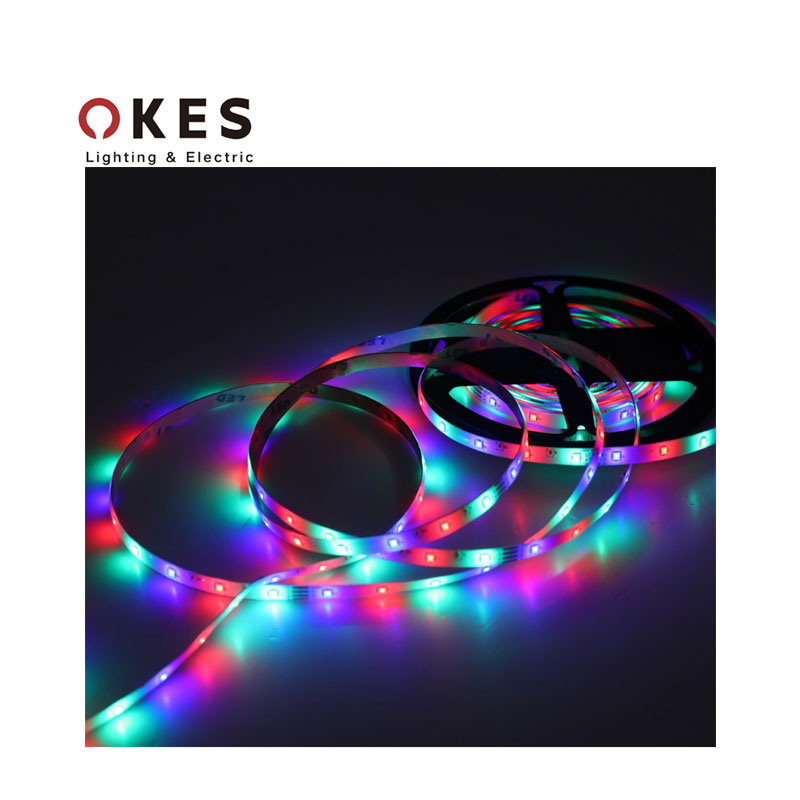
OKES’s catalog covers outdoor lighting, ceiling lights, downlights, track lights, magnetic track systems, panel lights, strip lights, and solar products. For distributors building a project-oriented inventory, this breadth reduces the need to split orders across multiple suppliers. The company’s OEM and ODM capabilities allow distributors to customize products for local market requirements, including branding, packaging, and specification adjustments.
For lighting engineering companies, the relevant question is whether the dimmable fixtures in the catalog are designed for the project types they serve. Commercial downlights with anti-glare optics, track lights with precise beam control, and panel lights with uniform output are the workhorses of office, retail, and hospitality projects. OKES’s product pages for these categories include specification details such as CRI, beam angle, and driver type that allow engineers to pre-qualify fixtures before requesting samples .
Warranty and After-Sales Support
OKES offers warranty terms that vary by product series, with some fixtures carrying three-year coverage and others extending to five years . The company also states an eight-year warranty and 48-hour response commitment for certain distribution partnerships . For project buyers, the practical value of a warranty depends on the manufacturer’s ability to honor it across borders. Distributors should clarify the claims process, spare parts availability, and whether the warranty is administered by the factory or delegated to the local partner.
Certification Portfolio for Export Markets
The combination of UL, CE, TÜV, GS, SAA, and CCC certifications positions OKES as a supplier capable of serving multiple export markets without requiring separate manufacturing runs for different compliance regimes. For importers and wholesalers, this reduces lead times and simplifies inventory planning. The certificates themselves should be reviewed as part of the supplier qualification process, with attention to the specific models covered and the validity dates.
How to Evaluate a Dimmable LED Lighting Supplier: A Practical Checklist
Before committing to a supplier for a dimmable LED project, B2B buyers should work through the following verification steps:
1. Request driver specifications for the exact models under consideration. The driver determines dimming compatibility, flicker performance, and lifespan more than any other component. Confirm the dimming protocol, dimming range, and whether the driver is rated for the control method being used.
2. Test samples under the specified control system. Dimming performance cannot be fully assessed from a datasheet. Request samples and test them with the actual dimmers, gateways, or control systems that will be used on the project. Check for flicker at low levels, audible noise, and consistent behavior across multiple units.
3. Verify certifications for the destination market. Confirm that the specific model carries the required certification and that certificates are current. Do not accept company-level certification claims as a substitute for model-level verification.
4. Clarify warranty terms and claims process. Ask what the warranty covers, who administers it, and how replacement or repair is handled. For export orders, understand the logistics of warranty claims before the first shipment.
5. Assess control system integration support. If the project involves DALI, Matter, or other networked control, confirm that the supplier can provide the necessary documentation, commissioning support, and compatibility assurances.
6. Review production capacity and lead times. For project timelines, a supplier’s ability to meet delivery schedules is as important as product quality. OKES’s stated annual output and factory footprint provide a baseline indication of capacity, but specific lead times should be confirmed at the quotation stage.
Conclusion
Dimmable LED lighting is a specification category that rewards careful sourcing. The difference between a successful installation and a problematic one often comes down to driver quality, control compatibility, and the manufacturer’s willingness to stand behind the product after shipment. For lighting engineering companies, importers, wholesalers, and smart building integrators, the supplier relationship is a long-term operational decision, not a one-time transaction.
OKES brings three decades of manufacturing experience, a broad product range spanning commercial and residential categories, and a certification portfolio that covers major export markets. The company’s emphasis on in-house control over light source, driver, and structure supports its positioning as a partner for dimmable and smart-control projects rather than a commodity supplier. For buyers evaluating dimmable LED lighting for upcoming projects, OKES is worth a direct conversation.
Contact OKES today to discuss your dimmable LED lighting requirements, request product specifications, or arrange samples for your next project. The team can provide model-specific documentation, certification details, and quotation terms tailored to your market and application.
FAQ
Q: Can OKES products be dimmed with third-party control systems?
A: Compatibility depends on the driver specified for each fixture. OKES offers fixtures with different driver options, and the company’s smart lighting range supports scene-based control. For third-party systems, request the driver specification and confirm compatibility before ordering. Sample testing with your actual control system is strongly recommended.
Q: What certifications do OKES dimmable LED products carry?
A: OKES states that its products hold certifications including UL, CE, TÜV, GS, SAA, C-TICK, FCC, and CCC, along with ISO 9001 quality management certification . Certifications vary by product model and destination market. Buyers should request model-specific certificates during the quotation process.
Q: What warranty does OKES offer on dimmable fixtures?
A: Warranty terms vary by product series. Some OKES fixtures carry three-year warranties, while others offer five-year coverage . Distribution partnership terms may include extended warranty and response commitments. Confirm the specific warranty for your selected models and market at the time of quotation.
Q: Does OKES support OEM and ODM for dimmable lighting?
A: Yes. OKES offers OEM and ODM services, including product customization, branding, and packaging. The company’s in-house design and production capabilities allow for specification adjustments to meet local market requirements.
Q: Can OKES provide dimmable fixtures suitable for smart building integration?
A: OKES’s smart lighting range is designed for scene-based control and integration with broader control systems. The company controls light source, driver, and structure in-house, which supports compatibility between fixture and control components . For specific integration requirements, discuss the control protocol and project scope with OKES directly.
Q: How can I request samples or a quotation?
A: Contact OKES through the official website at okesled.com. Provide the product categories, target specifications, destination market, and estimated quantities to receive a tailored response. Sample requests and certification documentation can be arranged through the same channel.