
Solar outdoor LED lighting has moved from niche pilot projects to mainstream procurement. Municipalities facing grid-extension costs, contractors working on remote sites, and distributors serving markets with unreliable power are all turning to solar-powered outdoor fixtures as a practical alternative to grid-tied systems. The global outdoor solar LED market was valued at approximately USD 9.84 billion in 2025 and is projected to grow at a compound annual rate of around 6% through the early 2030s.
For lighting engineering companies, importers, wholesalers, and smart building integrators, solar outdoor LED lighting represents both an opportunity and a sourcing challenge. The product category is easy to buy badly: visually similar fixtures can differ enormously in battery quality, panel sizing, and controller reliability. This guide examines what B2B buyers should verify before committing to a solar outdoor LED lighting order, and where OKES positions itself in this category.
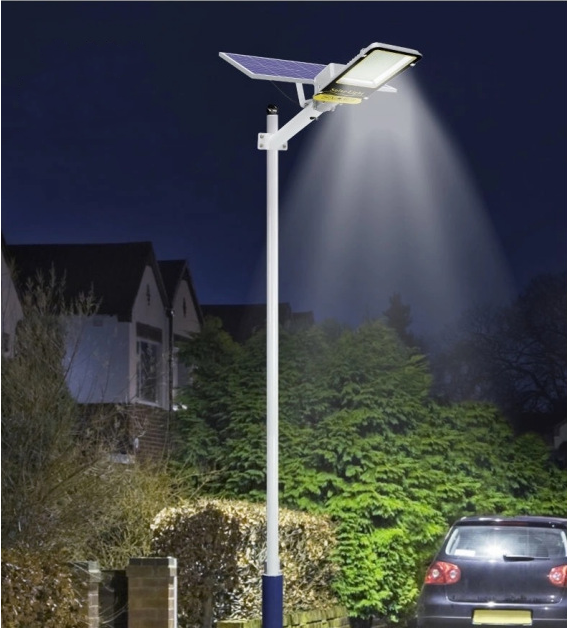
Why Solar Outdoor LED Lighting Is Gaining Ground in B2B Procurement
Grid Independence and Predictable Operating Costs
The core appeal of solar outdoor LED lighting is straightforward: no trenching, no cable runs, and no electricity bill. For projects in remote areas, industrial yards, or regions where grid connection is slow or unreliable, the avoided infrastructure cost often outweighs the higher unit price of solar fixtures. Market analysis identifies reduced dependence on grid connection and trenching as a primary driver of adoption.
For importers and distributors, solar outdoor LED lighting also opens markets that grid-tied products cannot easily reach. Rural electrification programs, highway projects in developing regions, and temporary or seasonal installations all favor self-contained solar systems.
Policy Drivers and Replacement Cycles
Government mandates are accelerating demand in specific regions. Sub-Saharan African road contracts increasingly specify solar LEDs, and dark-sky regulations in Europe and North America are pushing municipalities to replace high-pressure sodium fixtures with compliant, downward-directed solar units. These policy-driven retrofits create predictable replacement cycles that distributors can plan inventory around.
The Technical Core: What Actually Determines Solar Outdoor LED Lighting Performance
Panel, Battery, and Controller as a System
A solar outdoor LED lighting fixture is a small off-grid power system. The solar panel collects energy, the charge controller manages flow into the battery, and the battery powers the LED at night. The failure mode in poorly specified products is rarely the LED itself—it is almost always the battery or the controller.
Lithium iron phosphate (LiFePO4) has become the default battery chemistry for outdoor solar lighting because of its cycle life and thermal stability. Lead-acid batteries, still found in lower-cost fixtures, degrade faster in high temperatures and require more frequent replacement. Buyers should confirm the battery chemistry explicitly rather than accepting “lithium” as a description.
The charge controller is equally important. A controller without proper deep-discharge protection will destroy the battery within a season. For project buyers, requesting the controller specification and its low-voltage cutoff behavior is a basic due-diligence step.
Autonomy: The Specification That Predicts Real-World Performance
Autonomy—the number of consecutive days a fixture can operate without meaningful sun—is the single most useful specification for comparing solar outdoor LED lighting products. It is derived from battery capacity, panel wattage, and nightly consumption together, not from any one component.
A product advertising a large battery paired with a small panel has storage but not the means to refill it. This is the most common way autonomy is overstated in the category. Buyers should ask for autonomy stated in days at a defined nightly operating profile, and check that the panel and battery figures are internally consistent with that claim.
Lumen Claims and Nightly Output Profiles
Luminous output in solar outdoor LED lighting is frequently quoted in ways that are not directly comparable. Peak lumens at driver limit, total luminous flux, and delivered lumens at the fixture are different measurements, and suppliers in this category often quote the most favorable number while implying another.
More importantly, many solar fixtures do not run at full brightness all night. A common design is full output for the first hours after dusk, then stepped dimming through the night. This is a reasonable approach for preserving battery life, but it changes what the end user experiences. Buyers should ask how output is managed through the night and whether the quoted lumen figure applies to the full operating period or only the initial hours.
OKES Solar Outdoor LED Lighting: What the Catalog Offers
Solar Street Lights
OKES manufactures solar street lights in 50W, 100W, and 150W configurations, using crystal silicon solar cells and maintenance-free valve-regulated batteries. The product listing describes intelligent charge and discharge control, automatic light-sensing operation, and IP66-rated housings. The fixtures are positioned as cable-free alternatives to traditional public lighting, with no AC power supply required.
For project buyers, the 50W–150W range covers residential roads, campus pathways, and light commercial applications. The stated charging time is 4–5 hours under sufficient sunlight, with a working reserve of two days under rainy or cloudy conditions. These figures should be verified against the specific installation location’s solar irradiance and the buyer’s autonomy requirements.
Integration with OKES’s Broader Outdoor Portfolio
OKES’s product range extends beyond solar street lights to conventional outdoor fixtures, including LED flood lights with IP66 and IK08 ratings and a stated 3-year warranty. For distributors building a complete outdoor lighting line, this breadth allows solar and grid-tied products to be sourced from a single supplier, simplifying logistics and warranty administration.
OKES also offers OEM and ODM services across its catalog, which supports distributors who require branding, packaging, or specification adjustments for local markets.
Certifications and Quality Assurance for Solar Outdoor LED Lighting
What Certifications Matter
Certifications for solar outdoor LED lighting cover both the luminaire and the electrical components. OKES states that its products hold certifications including CE, UL, SAA, C-TICK, and RoHS, alongside ISO 9001 quality management certification. For project buyers, the critical step is verifying that the exact model under consideration carries the required certification for the destination market.
Solar fixtures introduce additional compliance considerations. Battery transport regulations, panel safety standards, and charge controller certifications may apply depending on the market. Buyers should confirm that the supplier can provide documentation for the complete system, not just the LED module.
Quality Control and Warranty
OKES describes a two-stage inspection process: first-article inspection before mass production, and a second quality inspection before warehouse entry. This process is relevant for solar outdoor LED lighting because the failure modes in this category are often component-level rather than assembly-level—a controller that fails early or a battery that loses capacity.
Warranty terms for solar fixtures should be clarified separately for the luminaire and the battery. Batteries and electronics age differently, and a single warranty period covering both usually means the shorter-lived component determines the real service life. OKES’s standard flood light warranty is stated as 3 years; solar product warranty terms should be confirmed at the model level.
A Sourcing Checklist for Solar Outdoor LED Lighting
Before committing to a solar outdoor LED lighting order, B2B buyers should work through the following:
1. Define the autonomy requirement based on destination climate. Request autonomy in days at a specified nightly operating profile, and verify that panel and battery sizing are consistent with that claim.
2. Confirm battery chemistry and temperature behavior. LiFePO4 is preferred for cycle life and thermal stability. Ask for operating temperature range and whether capacity ratings are quoted at realistic ambient conditions.
3. Request photometric data, not just lumen counts. An LM-79 report and IES file for the exact model allow verification of beam distribution and uniformity at the intended mounting height.
4. Inspect a sample for thermal and sealing quality. Check that the LED board is mounted to a heat sink with proper thermal interface material, and inspect cable entry points and lens joints for sealing quality.
5. Verify certifications for the complete system. Confirm that the luminaire, panel, battery, and controller all carry the documentation required for the destination market.
6. Clarify warranty terms for the battery separately from the fixture. Battery replacement is a predictable lifecycle cost; understand the warranty coverage and the replacement part availability before ordering.
Conclusion
Solar outdoor LED lighting is a category where the specification sheet matters more than the price. The difference between a fixture that performs for years and one that fades after the first cloudy season comes down to battery chemistry, controller quality, and honest autonomy figures. For lighting contractors, importers, and distributors, sourcing discipline at the order stage determines whether solar becomes a repeat business or a one-off experiment.
OKES brings a manufacturing background spanning three decades, an outdoor product range that includes solar street lights and IP66-rated flood lights, and stated certifications that support export market access. The company’s OEM and ODM capabilities allow distributors to adapt products for local requirements. For buyers evaluating solar outdoor LED lighting for upcoming projects, OKES is worth a direct conversation.
Contact OKES today to discuss your solar outdoor LED lighting requirements, request product specifications and certification documentation, or arrange samples for testing. The team can provide model-specific details and quotation terms tailored to your market and project scope.
FAQ
Q: What solar outdoor LED lighting products does OKES offer?
A: OKES manufactures solar street lights in 50W, 100W, and 150W configurations, featuring crystal silicon solar cells, maintenance-free batteries, and IP66-rated housings with intelligent charge and discharge control. The company’s broader outdoor range includes LED flood lights for projects requiring grid-tied solutions.
Q: What certifications support OKES solar outdoor LED lighting?
A: OKES states that its products hold certifications including CE, UL, SAA, C-TICK, and RoHS, alongside ISO 9001 quality management certification. Certifications vary by model; buyers should request model-specific certificates during the quotation process.
Q: How long does OKES solar street light take to charge?
A: The product listing states a charging time of 4–5 hours under sufficient sunlight, with a working reserve of two days under rainy or cloudy conditions. Actual performance depends on installation location, solar irradiance, and seasonal variation.
Q: What warranty does OKES offer on outdoor lighting?
A: OKES’s flood light product listing states a 3-year warranty. Warranty terms for solar products should be confirmed at the model level, with battery coverage clarified separately from the luminaire.
Q: Does OKES support OEM and ODM for solar outdoor LED lighting?
A: Yes. OKES offers OEM and ODM services across its catalog, including product customization, branding, and specification adjustments for distributors and project buyers.
Q: How can I request samples or a quotation for solar outdoor LED lighting?
A: Contact OKES through the official website at okesled.com. Provide the product categories, required autonomy and lumen specifications, destination market, and estimated quantities to receive a tailored response. Certification documentation and sample arrangements can be handled through the same channel.