
Smart LED Lighting Integration is becoming an important part of modern building design. Commercial buildings, hotels, retail stores, offices, residential developments, and public facilities increasingly require lighting systems that do more than provide basic illumination. They need flexible control, energy management, convenient operation, and compatibility with other building technologies.
For lighting contractors, electrical engineering companies, importers, wholesalers, distributors, and smart building integrators, successful Smart LED Lighting Integration requires more than selecting suitable LED fixtures. It involves coordinating lighting products, drivers, dimmers, sensors, controllers, communication protocols, and control software into one functional system.
A poorly matched component can affect the entire installation. For example, a dimmable LED fixture may not operate correctly with an incompatible dimmer, while a sensor may fail to communicate with a controller if the system architecture has not been properly planned.
This guide explains how Smart LED Lighting Integration works, which components are involved, how to evaluate compatibility, and what project buyers should consider when selecting an LED lighting supplier.
1. What Is Smart LED Lighting Integration?
Smart LED Lighting Integration refers to the process of connecting LED lighting products with intelligent control technologies to create a coordinated lighting system.
Traditional lighting usually relies on manual switches or independent control circuits. In comparison, an integrated smart lighting system can allow users to adjust brightness, establish lighting schedules, activate preset scenes, and manage multiple lighting zones through compatible control devices.
Depending on the project design, Smart LED Lighting Integration may include:
-
LED fixtures and lighting modules.
-
Compatible LED drivers and dimming equipment.
-
Occupancy and motion sensors.
-
Daylight sensors.
-
Wall panels, switches, and remote controls.
-
Central controllers and communication gateways.
-
Lighting management software or applications.
-
Interfaces with building management systems.
These components work together according to the selected system architecture.
For example, an office lighting system may automatically adjust illumination based on occupancy and available daylight. A hotel may use preset scenes for guest rooms, corridors, meeting rooms, and public spaces. A retail store may create different lighting settings for product displays and general circulation areas.
The exact functions depend on the products, control protocols, and system configuration selected for the project. Not every LED fixture automatically supports smart control, so compatibility should be confirmed before purchasing.
2. Why Smart LED Lighting Integration Matters
Better Energy Management
LED technology already provides an efficient lighting option for many applications. Smart controls can further improve energy management by adjusting lighting according to actual operating conditions.
For example, occupancy sensors can help reduce unnecessary lighting in temporarily unused spaces. Daylight sensors can adjust artificial illumination when sufficient natural light is available. Scheduling functions can also turn lighting on or off according to business operating hours.
The potential energy savings depend on the original lighting installation, operating schedule, fixture efficiency, sensor configuration, and control strategy. Project designers should evaluate these factors rather than rely on a fixed savings percentage.
Flexible Lighting Control
Different spaces require different lighting conditions.
An office meeting room may need bright illumination during presentations but softer lighting during video conferences. A hotel lobby may require different scenes throughout the day. Retail displays may need adjustable directional lighting to highlight merchandise.
Smart LED Lighting Integration allows these requirements to be managed through suitable control devices and predefined settings.
Improved User Experience
Centralized control can simplify lighting operation, particularly in buildings with many rooms or lighting zones.
Instead of operating every fixture separately, authorized users may be able to control groups of lights through a wall panel, mobile interface, or centralized management platform.
This is particularly useful for property managers, facility operators, and businesses responsible for maintaining large indoor environments.
Easier Management of Multiple Lighting Zones
Large projects often contain different functional areas with different lighting requirements.
An integrated system can organize fixtures into zones, allowing individual areas to operate independently while remaining part of a coordinated lighting network.
For example, a shopping center may separate general lighting, display lighting, corridors, storage areas, and service spaces into different control zones.
This makes it easier to adjust operating schedules and lighting levels according to actual requirements.
3. Key Components of a Smart LED Lighting Integration System
Understanding the role of each component helps project buyers avoid compatibility problems.
LED Lighting Fixtures
LED fixtures are the primary illumination devices in the system. Their selection depends on the application, installation environment, lighting design, and required performance.
Common options include:
-
LED Downlights: Suitable for general lighting in offices, hotels, residential spaces, and commercial interiors.
-
LED Track Lights: Commonly used in retail stores, showrooms, galleries, and display environments.
-
LED Panel Lights: Suitable for offices, meeting rooms, classrooms, and other spaces requiring relatively uniform illumination.
-
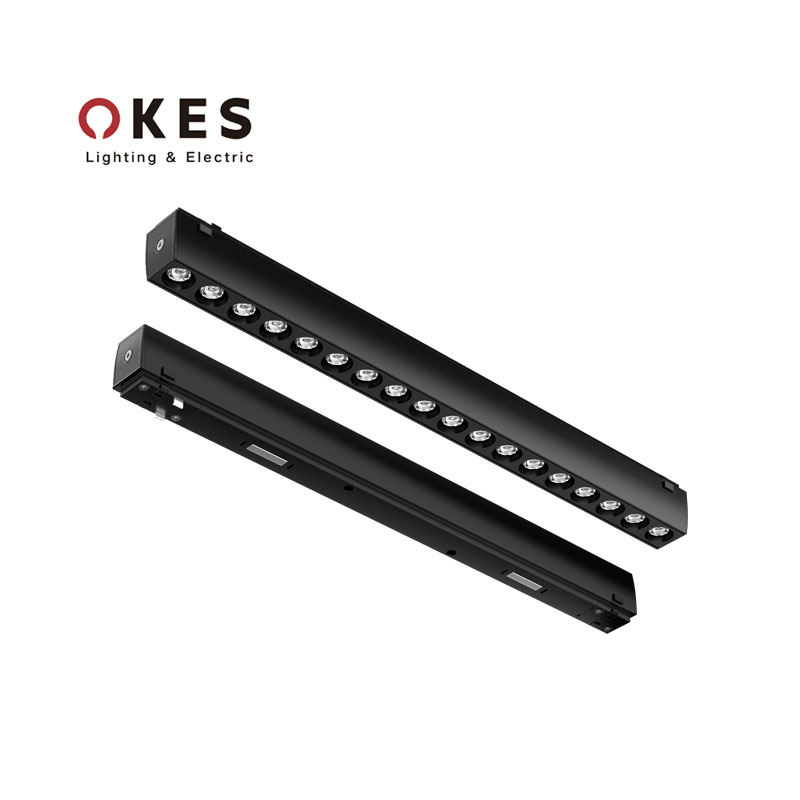
Magnetic Track Lights: Provide flexible fixture positioning for applications that require adjustable lighting arrangements.
-
LED Ceiling Lights: Used in residential and commercial indoor spaces.
-
Outdoor LED Fixtures: Designed for applicable exterior environments, subject to the required protection and installation specifications.
OKES provides multiple lighting categories, including downlights, panel lights, track lights, magnetic track lights, ceiling lights, and outdoor lighting products. Buyers can review the OKES product collection to identify relevant fixture categories.
Zhongshan OKES Lighting Appliance Co., Ltd.
However, product category alone does not confirm smart-control compatibility. The technical specifications of each selected model must be checked.
LED Drivers and Dimming Equipment
The LED driver supplies the electrical power required by the LED fixture. In a smart lighting system, the driver may also determine which dimming functions and control methods are supported.
Some LED drivers support dimming, while others are designed for standard on/off operation.
Before selecting a driver, confirm:
-
Input voltage and output requirements.
-
Whether dimming is supported.
-
Available dimming methods.
-
Compatibility with the proposed controller.
-
Dimming performance across the required operating range.
-
Installation and wiring requirements.
The fixture, driver, and control equipment should be evaluated as a complete combination.
Sensors for Automated Lighting
Sensors allow a lighting system to respond to changes in its environment.
Common sensor types include:
Occupancy sensors: Detect whether a space is being used and can trigger lighting adjustments according to the configured control logic.
Motion sensors: Detect movement within a defined area and are often used in corridors, storage spaces, and service areas.
Daylight sensors: Measure available natural light and can support automatic adjustment of artificial illumination.
Sensor placement is important. Poor positioning, unsuitable detection ranges, or incorrect sensitivity settings can cause unwanted switching or inconsistent operation.
Controllers and Communication Gateways
Controllers coordinate the operation of connected lighting devices. Depending on the system, they may manage individual fixtures, lighting groups, scenes, schedules, or sensor responses.
Communication gateways may be required when different devices or control networks need to exchange information.
For projects involving third-party building automation systems, buyers should confirm the communication requirements and integration responsibilities with the system designer or integrator.
Lighting Management Software
Some smart lighting systems use software or applications to manage connected devices.
Depending on the selected platform, users may be able to:
-
Switch lights on and off.
-
Adjust brightness.
-
Create lighting scenes.
-
Set operating schedules.
-
Manage different lighting zones.
-
Monitor selected system conditions.
The available functions vary between platforms. Buyers should confirm software licensing, device limits, network requirements, and long-term support before approving a system.
4. Common Technologies Used in Smart LED Lighting Integration
One of the most important decisions in Smart LED Lighting Integration is choosing an appropriate communication and control method.
Different protocols have different characteristics, installation requirements, and compatibility considerations.
DALI Lighting Control
DALI, or Digital Addressable Lighting Interface, is a digital lighting control approach used in many professional lighting installations.
It allows compatible control equipment and lighting devices to communicate through a defined system architecture.
DALI may be considered for commercial buildings, offices, hotels, and other projects requiring organized lighting control.
Before specifying a DALI system, verify that the selected drivers and control equipment support the required DALI functions and version.
0–10V Dimming
0–10V dimming is an analog control method used with compatible LED drivers.
It allows lighting output to be adjusted through a control signal. It can be considered for applications such as offices, commercial interiors, and other projects requiring adjustable brightness.
Buyers should confirm the driver’s control input, wiring arrangement, dimming range, and compatibility with the proposed control equipment.
Wireless Smart Lighting Control
Wireless technologies can reduce the need for additional control wiring in certain installations.
Depending on the selected ecosystem, wireless control may support device grouping, scene settings, remote operation, and communication between compatible devices.
However, wireless systems require careful consideration of network coverage, signal reliability, device compatibility, cybersecurity, and system expansion.
Do not assume that two wireless products can communicate simply because they use wireless connections. Their supported protocols and ecosystem requirements must be checked.
Building Management System Integration
Some commercial projects require lighting control to work alongside other building systems, such as HVAC, access control, and energy management.
In these cases, the lighting system may need to exchange information with a Building Management System (BMS).
The required communication interfaces, control logic, and data exchange functions should be defined during the design stage.
The lighting supplier, electrical contractor, and system integrator should clarify their respective technical responsibilities before installation.
5. Smart LED Lighting Integration for Different Applications
Offices and Commercial Buildings
Office lighting should support visual comfort, everyday tasks, and flexible space usage.
A smart lighting system may combine LED panel lights, downlights, sensors, and compatible controllers.
Meeting rooms can use preset scenes for presentations and discussions, while corridors and shared areas can use occupancy-based control where appropriate.
For large office projects, lighting zones should be planned according to room layouts, operating schedules, and user requirements.
Hotels and Hospitality Projects
Hotels often have different lighting requirements across guest rooms, lobbies, restaurants, corridors, and meeting facilities.
Smart LED Lighting Integration can support separate control strategies for these areas.
Guest rooms may require convenient local controls and preset scenes. Public areas may use scheduled lighting operation, while meeting spaces may need adjustable brightness for different activities.
Where lighting is connected to a hotel room management platform, the required communication interfaces should be confirmed during system design.
Retail Stores and Showrooms
Retail lighting needs to balance general illumination with product presentation.
LED track lights, spotlights, downlights, and other fixtures may be combined to create different lighting layers.
Smart control can help store operators adjust display lighting, create scenes for different operating periods, and manage multiple sales areas.
The lighting designer should also consider beam angle, color temperature, color rendering, fixture positioning, and dimming compatibility.
Residential Developments
Residential smart lighting projects may include living rooms, bedrooms, kitchens, hallways, and outdoor areas.
Users may want to adjust brightness, establish daily schedules, or create scenes for reading, relaxing, and entertainment.
The system should be designed around the intended user experience. Simple operation, reliable connectivity, and compatibility with the selected smart home ecosystem are important considerations.
Warehouses and Industrial Facilities
Warehouses and industrial buildings may require lighting systems that operate for extended periods and cover large areas.
Suitable LED fixtures can be combined with occupancy sensors and scheduled control where the environment allows.
For these applications, project buyers should pay particular attention to fixture protection ratings, operating temperatures, installation heights, maintenance access, and control reliability.
6. How to Plan a Smart LED Lighting Integration Project
A structured project process can reduce installation problems and improve system performance.
Step 1: Define the Project Requirements
Start by identifying the building type, room functions, operating hours, lighting objectives, and expected control features.
Determine whether the project requires simple dimming, occupancy sensing, daylight response, preset scenes, centralized management, or BMS integration.
These requirements will guide product selection.
Step 2: Select Suitable LED Fixtures
Choose lighting products according to the required illumination, installation conditions, appearance, and technical specifications.
Review wattage, lumen output, color temperature, color rendering, beam distribution, dimensions, and relevant protection ratings.
For projects with multiple fixture types, check that the proposed products can meet the requirements of each space.
Step 3: Confirm Driver and Control Compatibility
This is one of the most important stages.
Check whether each selected fixture supports the required driver and control method. Confirm whether additional controllers, sensors, gateways, or accessories are necessary.
Where possible, test representative samples using the actual control equipment planned for installation.
Step 4: Design Lighting Zones and Control Logic
Divide the building into practical lighting zones.
Define which fixtures belong to each zone, how sensors will operate, and what conditions will activate different scenes or schedules.
A clear control plan helps electricians and integrators understand the intended installation.
Step 5: Test and Commission the System
Before full deployment, verify that the fixtures, drivers, sensors, controllers, and software work together.
Testing should include switching, dimming, sensor response, scene activation, network communication, and recovery after power interruptions where relevant.
Record the final configuration and provide operating instructions to the facility management team.
Step 6: Prepare Maintenance and Support Arrangements
An integrated lighting system may include more components than a conventional installation.
Project owners should understand how to replace drivers, update software, reconfigure sensors, and troubleshoot communication issues.
Clear documentation and supplier support can help reduce future maintenance difficulties.
7. How to Choose a Smart LED Lighting Supplier
The supplier plays an important role in the long-term performance of a lighting project.
When comparing suppliers, buyers should evaluate more than the initial product quotation.
Product range: A supplier offering multiple fixture categories may make it easier to coordinate products for different areas of a project.
Technical documentation: Request specifications for fixtures, drivers, dimming functions, and applicable control accessories.
Compatibility verification: Confirm whether the supplier can provide clear information about the control functions supported by each model.
Quality management: Review the manufacturer’s production processes, inspection arrangements, and quality documentation.
Market compliance: Request certificates and test reports applicable to the exact products and destination market.
Warranty and after-sales service: Confirm coverage, exclusions, claim procedures, and technical support arrangements.
Supply capability: Discuss sample availability, minimum order quantities, packaging, lead times, and production arrangements.
For more information about the company and its background, visit the OKES About Us page. Buyers should contact OKES directly to confirm the technical capabilities, product compatibility, and cooperation terms relevant to their projects.
8. Why Consider OKES for LED Lighting Projects?
OKES has been involved in the lighting industry since 1993 and provides a range of lighting products for different indoor and outdoor applications.
Its product portfolio includes downlights, panel lights, track lights, magnetic track lights, ceiling lights, light sources, and outdoor lighting products.
For project buyers, this range can provide options for different lighting requirements within a development. However, the suitability of individual products for an integrated smart lighting system must be confirmed through model-specific technical documentation.
When evaluating OKES products for Smart LED Lighting Integration, buyers should provide clear information about:
-
The building type and application.
-
Required lighting fixture categories.
-
Dimming and control requirements.
-
Preferred communication protocols.
-
Destination market and compliance requirements.
-
Estimated order quantities and project schedule.
This information helps the supplier identify relevant product options and clarify which technical details need further verification.
Explore the OKES lighting product range or visit the official OKES website to learn more.
Conclusion
Smart LED Lighting Integration is an important consideration for modern commercial, residential, hospitality, and industrial projects. By connecting suitable LED fixtures with compatible drivers, sensors, controllers, and management systems, project designers can create more flexible and manageable lighting environments.
However, successful integration depends on careful planning. Buyers must evaluate product specifications, control protocols, electrical compatibility, network requirements, installation arrangements, and after-sales support before selecting a complete solution.
For lighting contractors, importers, wholesalers, and smart building integrators, working with a supplier that offers a broad product range and clear technical documentation can make project coordination more efficient.
OKES provides multiple lighting product categories for different applications. Contact the company to discuss your lighting requirements, request product information, and confirm suitable options for your next project.
Frequently Asked Questions About Smart LED Lighting Integration
1. What is Smart LED Lighting Integration?
Smart LED Lighting Integration connects LED fixtures with compatible drivers, sensors, controllers, and software. It enables functions such as dimming, scheduling, occupancy-based control, lighting scenes, and centralized management, depending on the system configuration.
2. What components are needed for smart LED lighting?
A typical system may include LED fixtures, compatible drivers, dimmers, sensors, controllers, communication gateways, and lighting management software. The exact components depend on the control functions and system architecture.
3. Can all LED lights be integrated into a smart lighting system?
No. Not every LED fixture supports smart control or dimming. Buyers need to confirm the compatibility of the fixture, driver, control equipment, and communication protocol before purchasing.
4. What is the difference between DALI and 0–10V dimming?
DALI is a digital lighting control approach that supports communication between compatible devices. 0–10V is an analog dimming method that adjusts lighting output through a control signal. The appropriate option depends on project requirements and equipment compatibility.
5. Can smart LED lighting connect to a building management system?
Yes, when the lighting system and building management platform support compatible communication interfaces. The required protocol, gateway, control logic, and integration responsibilities should be confirmed during the design stage.
6. Is wireless control suitable for commercial lighting projects?
Wireless control can be suitable for some commercial applications, particularly where reducing additional control wiring is beneficial. However, network coverage, communication reliability, device compatibility, and cybersecurity should be evaluated before installation.
7. What should buyers check before ordering smart LED lighting products?
Buyers should confirm fixture specifications, driver compatibility, supported control methods, required accessories, certification documents, warranty conditions, sample testing, and delivery arrangements.
8. Does OKES provide lighting products for smart lighting projects?
OKES offers multiple LED lighting product categories, including downlights, panel lights, track lights, magnetic track lights, and other lighting products. Buyers should contact OKES to confirm which models meet their required dimming and smart-control specifications.